United Nations Environment Programme
North-West Sahara Aquifer System(NWSAS), Phase II
Mid-term Review of the
"Mécanisme de Concertation" component of the
North West Sahara Aquifer System project
Mr. Mark Halle
International Institute for Sustainable Development (IISD)
Consultant to SDC and UNEP/GEF
Evaluation and Oversight Unit (EOU)
May 2005
LIST OF ACRONYMS AND ABBREVIATIONS
1.
CEDARE
Centre for Environment and Development of Arab Region and Europe
2.
FAO
Food and Agricultural Organization of the United Nations
3.
FFEM
Fonds français pour l'Environnement Mondial (French GEF)
4.
ISARM
International Shared Aquifer Resource Management
5.
MC
Mécanisme
de
Concertation
(Mechanism for concerted action)
6.
NGO Non-Governmental
Organization
7.
NWSAS
North West Sahara Aquifer System
8.
OAS
Organization of American States
9.
OSS
Observatoire du Sahara et du Sahel
10.
SASS
Système Aquifère du Sahara Septentrionnal
11.
SDC
Swiss Agency for Development and Cooperation
12.
UMA
Union du Maghreb arabe
13.
UNECE
United Nations Economic Commission for Europe
14.
UNEP/GEF
United Nations Environment Programme/Global Environment Facility
15.
UNESCO (IHP)
United Nations Education, Science and Culture Organization (International
Hydrological Programme)
2
TABLE OF CONTENTS
List
of
Acronyms
and
Abbreviations
2
Acknowledgements
4
Executive Summary
5
I.
Background
to
the
Consultancy
7
II.
A Brief Presentation of the Project
7
III.
Introduction
9
IV.
Approach and Method
9
V.
A
Note
on
the
Meaning
of
Concertation
10
VI.
Evaluation of the "Volet Mécanisme de Concertation"
11
VII.
Lessons learned on Institutional Aspects of Transfrontier Water Management
14
VIII.
Operating Principles of the Mécanisme
de
Concertation
18
IX.
Possible Roles for the Mécanisme de Concertation
18
X.
Institutional Models for the Mécanisme
de
Concertation
21
XI.
Host
Structure
and
Legal
Status
22
XII.
Financial
Considerations
23
XIII.
Staffing
23
XIV.
Conclusions
23
Annex 1 Text of the December 2002 Decision on the MC
25
Annex 2 Examples of Transboundary Water Management Institutions and
Sources of Information
26
Annex
3
People
Interviewed
30
Annex
4
Terms
of
Reference
of
the
Consultancy
31
Annex 5 Presentation of the MC at the Steering Committee in Tripoli,
1-2
February
2005
32
Annex
6
Proposal
for
a
Permanent
Commission
33
Annex
7
Draft
Ministerial
Decision
48
3
Acknowledgements
This consultant operated under the guidance of Hans Schellenberg (SDC) and Takehiro Nakamura
(UNEP/GEF), with support from his UNEP colleagues Catrina Perch and Mela Shah.
The NWSAS project team proved to be both welcoming and open, and their positive attitude went a long way in
facilitating this consultant's work. Special thanks goes to Djamel Latrech, the project director, and to Wafa
Jouini, both of whom went out of their way to make the visits to the region effective and pleasant. I learned a
great deal, also, from some of the hydrogeological experts associated with the project or who have great
experience in the region, and especially Habib Zebidi, Prof. Mohamed Besbes and Bo Appelgren.
The Executive Director of OSS Youba Sokona was supportive throughout, and offered several important
insights that have found their way into this report.
The key partners in Libya, Algeria and Tunisia were perfect hosts. Thanks especially to Rachid Taibi and his
colleagues for the generous hospitality in Algiers.
Finally, all of those interviewed helped me gain important insights on the project. I hope that this report will
offer them something in exchange.
4
Executive Summary
1.
What began as a consultancy to evaluate the component of the NWSAS project relating to the Mechanism
for Concerted Action (MC) evolved to become part evaluation, and part design consultancy for the mechanism to be
put in place before the close of this phase of NWSAS in late 2005 or early 2006. Formally speaking the MC
component of the project could be deemed to include almost all action undertaken in common by the three NWSAS
countries. However, this report focuses on the sub-component relating to the mechanism designed to follow on from
the current project.
2.
The conclusions are based on three different sources of information. The first is a series of interviews with
OSS, the project team, members of national NWSAS steering committees, representatives of the project donors and
international experts familiar with the challenges of rational management of Sahara groundwater. The second is an
extensive review of the project documents, technical and administrative reports, and participation in the NWSAS
Steering Committee (Tripoli, February 2005), in the MC workshop (Algiers, March 2005) and in both the OSS
Governing Board and the Round-Table on Transfrontier Water Management that was organized as part of its
proceedings (Tunis, April 2005). Finally, the consultant reviewed the literature related to transboundary water
management, with a special focus on institutional mechanisms to manage cooperation between countries sharing
water resources.
3.
A short section is devoted to an evaluation of progress in that part of the NWSAS project relating to the
MC. The "Volet Mécanisme de Coopération" comprises four sets of activities workshops for information and
public awareness, mechanisms for data collection and exchange, the monitoring network, and the design of the
permanent mechanism for concerted action. While the scope of the consultancy covers all four, the bulk of the
report focuses on the last of these.
4.
The principal challenge in this respect has been to reconcile two overlapping but substantially different
views. Some see the MC as a permanent materialization of the NWSAS project team (though with slightly different
functions), entrusted with the task of taking the project forward into what is basically a third phase. Others envisage
a light structure focused very centrally on the ongoing cooperation among the three countries in meeting the
challenge of managing the groundwater rationally. While on the surface, there may appear to be little difference
between the two, in fact the differences are significant. As the report argues, the principal difference lies in the
nature of the work to be done. In the first instance, the focus is likely to remain technical, based on the dictates of
hydrogeology. In the latter instance, a shift is effected to an approach more directed at managing the demand for
water - the tools of the former are largely technical; the tools of the latter largely social and political.
5.
The report surveys international experience in transfrontier water management with a view to identifying
best practice and, in particular, lessons from other parts of the world that might be applicable to the NWSAS.
However, it finds that the vast bulk of existing experience relates to shared watercourses and to managing the basins
of international rivers and lakes. The science of transboundary groundwater management is still in its infancy,
though some domestic practice could offer ideas for the NWSAS countries. Although the principles of managing
transfrontier resources generally apply also to groundwater, and whereas early experience in other transboundary
groundwater basins can offer some ideas, NWSAS must inevitably continue to serve as something of a pioneer.
6.
The report proposes a shift in the focus of the proposed cooperative mechanism from one that concentrates
on the supply and present use of the groundwater to one that focuses on managing the demand for that water, and
providing a range of options and incentives to moderate the current dangerously high rates of groundwater depletion.
Such an approach must rest on a solid technical foundation and, inevitably, keeping the database current and
revising and improving the models will require some tripartite cooperation. However, the bulk of the technical work
can and should be undertaken by the national water authorities, and the bulk of the international cooperation
required can be undertaken between countries using the existing system of "Comités mixtes" or "Comités
bilatéraux". If an MC is required, it is largely to coordinate and stimulate a range of activities that the NWSAS has
not undertaken and was not designed to undertake.
5
7.
As envisaged in this report, the MC will shift from a largely hydrogeological approach to one more focused
on translating the implications of the data generated by the NWSAS models into options for decision-making,
particularly tri-partite decision-making among the countries that share the aquifer. The report lays out some of the
principles on which the MC should operate, and suggests both core tasks that the MC should seek to discharge, and
other tasks that it might consider undertaking if the funding can be found.
8.
The principles are largely drawn from international experience in shared water management and from the
field of international water law, but many of them apply more generally to international cooperation on
environmental management.
9.
In terms of the tasks that the MC might undertake, a broad menu is presented, in two priority groups. A
first priority group is regarded as essential if the three countries are to rise to the challenge of controlling demand for
NWSAS water. They include monitoring trends in water use, joint work planning, providing a forum for tripartite
technical or political meetings on key issues, information exchange, the preparation of scenarios, the development of
policy options for decision-makers, and forums to ensure the participation of all key stakeholders. However given
adequate funding, there are many more things the MC might consider doing, even if they are not deemed essential at
this point. These include preparation of issue briefs, publication of an annual review on the State of the NWSAS,
review of water development or other major development proposals in the NWSAS basin, capacity building and
technical assistance, idea generation, action research, and conflict management.
6
North-West Sahara Aquifer System (NWSAS), Phase II
Mid-Term Review of the "Mécanisme de Concertation" component of the NWSAS Project
I.
Background to the Consultancy
10.
Roughly half way through the 27 months of the second phase of the NWSAS project, the principal donor
agencies FFEM, SDC and UNEP/GEF agreed to commission a mid-term evaluation of the project. They agreed
among themselves that FFEM would undertake a formal mid-term evaluation of the technical, socio-economic and
environmental aspects of the project; SDC and UNEP/GEF, together, would focus on evaluating the components of
the project relating to the "Mécanisme de Concertation"1 (hereafter MC).
11.
To that effect, the donors agreed that the two consultants would initiate their work by participating in the
second meeting of the NWSAS Steering Committee (Tripoli, 1 2 February, 2005). In the event, only this
consultant was in a position to participate in the Tripoli meeting. The experience led to a reorientation of the two
consultancies, and of the objectives set for each consultant.
12.
The Tripoli meeting made it clear that, while the three countries of the NWSAS basin have been
cooperating in a commendable manner, from a formal point of view there had not been a great deal of progress in
designing and setting up the MC as envisaged in the project documents that served as the basis for donor support
and funding.
13.
It was therefore agreed that this consultant would reorient his consultancy so that, beyond the relatively
light task of evaluating and commenting on the actions taken under the NWSAS project in relation to the "Volet
Mécanisme de Concertation", he would work with the NWSAS project team to help conceptualize, design and shape
the MC that will need to be adopted by the three countries and put in place before the present phase of the project
winds down at the end of calendar 2005.
14.
It was also agreed that, in view of the advanced stage of project implementation and the slight delays in
bringing the FFEM consultant on board, priority should be given to a final evaluation rather than a mid-term one.
This report therefore focuses on the MC, with no attempt to comment on the overall achievements of the project, or
to rate its progress against the agreed work objectives. Further, while a short section assesses progress in the MC
component against agreed milestones and objectives in the project document, most of the report concerns the
challenges facing the project in terms of promoting tri-country concerted action, ensuring the consolidation and
implementation of the priorities identified by the NWSAS, and contributing to the rational use of the shared
groundwater resources in the interest of sustainable development.
II.
A Brief Presentation of the Project
15.
The project under review is the second phase of the NWSAS project. A first phase was undertaken by OSS
with funding from the International Fund for Agricultural Development and SDC-Switzerland. It was designed to
run for a 36-month period from 1998 to 2000. In fact, the project got underway only in 1999 and concluded in
December 2002. It focused on the following objectives:
Technical
a)
Harmonization of hydrogeological data bases and geodesic data;
b)
Choice of observation network and measurement campaigns;
1 The French term is used because it reflects better the nature and purpose of this mechanism, intended to go further
than simple coordination, but stopping short of any executive function. It implies a mechanism through and by
means of which Libya, Algeria and Tunisia harmonize approaches and actions aimed at making the optimal use of
the NWSAS in the interest of long-term, sustainable development
7
c)
Geological & hydrogeological information collection and analysis of information acquired after 1970;
and
d)
Implementation and calibration of new models and simulation of exploitation scenarios.
Consultation Mechanism
e)
review of existing technical & scientific consultation commissions and appropriate strengthening of
these bodies towards the above objectives;
f)
regular information exchange;
g)
joint elaboration of simulation models;
h)
analysis of the internal legislation of each country (laws, regulations);
i)
joint analysis of existing water monitoring & control systems; and
j)
joint assessment of pertinent institutional capabilities and training facilities in place in each country.
16.
Based on the above, the project aimed to draw up a set of concerted specific water resource regulations at
the technical level with the appropriate institutional arrangements for consideration by the respective authorities in
each country. For this purpose, a consultation mechanism between the three countries was to be set up as a
permanent institution.
17.
Finally, with assistance from OSS and the Legal Bureau of the Development and Legislation Department of
the FAO, the project aimed to prepare an Inter-State Arrangement implying the adoption of common policies and
goals for the long-term management of the Northern Sahara Basin water resources.2
18.
The first phase resulted in an integrated vision of the aquifer basin and set in place a culture of information
exchange and common problem solving among the three countries that share it. Finally, it helped to identify and
reinforce the capacities in the three countries in a number of important areas relevant to the project's objectives.
19.
More specifically, it put in place an information system on the aquifer, designed a model of water use based
on this information, and used the model to simulate a range of scenarios on water use. It enabled the countries to
identify the most vulnerable zones within the NWSAS basin. And it secured the agreement of the three countries on
the design of a mechanism for concerted action among them.
20.
It reached the following conclusions:
· continued use of the NWSAS groundwater resources at present rates represents a grave danger for the
aquifer and for certain sensitive ecosystems;
· in some areas a slight increase in water use might still be envisaged;
· the scenarios based on upper-range calculations of water use would lead to an unacceptable situation;
· there are still unexploited stocks of water, especially in Western part of the basin, but their use would imply
large-scale transfers to populated areas;
· despite the results achieved in the project, important uncertainties and gaps in knowledge persist, both on
the assessment of the situation and on the possible solutions to known problems.3
It was thus deemed necessary to extend the project into a second phase, which benefits from the support of
UNEP/GEF (US$ 600,000, under execution since May 2003 and due to be completed in July 2005); FFEM (US$
2 Description of Phase I taken from the SDC internal summary of the funding request dated 6 February 1998
3 This assessment of the results of Phase I were adapted from the FFEM project document for Phase II.
8
300,000, under execution since July 2004) and SDC Switzerland (US$ 400,000, under execution since January
2003)4.
21.
The objectives of the second phase of NWSAS are as follows5:
a. Hydraulic component: aimed, on the one hand, at supplementing knowledge of the basin and, on
the other hand, at conducting further in-depth studies on the risk zones.
b. Socio-economic component: aimed at a better analysis of the consequences of the abstractions on
the populations, the exploitation modes of the resource and the environment. Effort was also to be
focused in particular on the wetlands and salty soils.
c. Environmental component: aimed to characterize the impacts of the abstractions on the
environment, with a special focus on wetlands and salty soils.
d. Information system component: aimed at consolidating the acquired knowledge and experience of
phase 1 by integrating the data generated by the other components, and at defining the modes of
administration, data exchange, as well as a firm establishment of the information system.
e. Consultation mechanism component: aimed at the setup of consulted basin management modes
based on a structure that is firmly established on the institutional and legal levels with clearly
defined prerogatives.
f. Monitoring-Evaluation component: relates to the administrative management of the project
ensured by the OSS.
III.
Introduction
22.
The Mécanisme de Concertation has been a component of both phases of the NWSAS project. A meeting
held at FAO headquarters in December 2002, at the end of the first phase, focused specifically on the design and
purpose of this MC. The text of the decision taken at that time is included in this report as Annex 1. Already then,
the MC was seen as the vehicle that would ensure further cooperation among the three countries following
completion of the forthcoming second phase of the NWSAS project. The two-year period of the second phase
coincided with the time deemed necessary for the MC to be agreed, designed and put in place. Doing this would
ensure a seamless transition at the conclusion of what was seen as the final phase of large-scale donor support to the
process of planning the management of the aquifer with a view to promoting sustainable development in the basin.
The clear assumption was that the MC would be up and running when the second phase of the project came to a
close, so as to ensure no loss of momentum in facing the challenge of managing the groundwater rationally.
23.
For this reason, the MC was included as a specific component of the Phase II project proposal, and a series
of specific actions were included in the project's work plan. These components are summarised in Section 5 of this
report, with a brief assessment of progress made in each. Broadly speaking, little attention was paid to the design of
the MC in the first year of the project. Tripoli served as a wake-up call in this respect, and a period of frenetic
activity followed. This period coincides with the period of this consultant's contract, such that this report comments
to a large extent on a process that was constantly developing and changing as the consultancy progressed.
IV.
Approach and Method
24.
The analysis and recommendations below are based on three principal sources of information: first, an
extensive review of the documentation relating to the project project documents and reports, commissioned papers,
4 These figures and dates are taken from the draft TOR provided to the consultant by SDC and UNEP/GEF. _They
are at some variance with the figures contained in the FFEM project document, though the proportions remain
similar.
5 Taken from the report of the NWSAS Steering Committee, second meeting, Tripoli, 1-2 February 2005.
9
technical documents relating to the aquifer, and material from earlier projects in the area, including the first phase of
the NWSAS project. Second, the consultant reviewed some twenty technical and policy sources relating to
management of shared aquifers, river basins or fossil groundwater resources. The most relevant of these sources,
with the web links where appropriate, are listed at Annex 2, together with an indication of where to look for
examples of transfrontier water management institutions. Finally, the consultant conducted over twenty interviews,
including most of the members of the national Steering Committees in the three countries, key experts from the three
countries, and representatives of donor agencies and intergovernmental organizations. Of these, more than two
thirds were extensive interviews, lasting over an hour. A list of those interviewed is attached at Annex 3.
25.
The consultant also attended the annual NWSAS Steering Committee meeting in Tripoli in January-
February, participated actively in a special workshop on the MC, held in Algiers in mid-March as well as the OSS
Executive Board meeting in Tunis in early April, including the Round Table on Transfrontier Water Resources
Management.
26.
The consultant's Terms of Reference are attached at Annex 4. They were prepared by SDC and
supplemented by UNEP/GEF and represent the view of the "evaluation" as it was initially conceived, and covered
the task of a two-person consultant team. As events unfolded, two factors affected the strict relevance of these TOR
as a road-map for the consultant. First, while it was initially intended that the two consultants work as a team, in
fact this did not prove to be possible. Second, following the Tripoli meeting, it became clear that an evaluation of
the MC is not the principal contribution needed at this stage. As a result, the consultant's task was shifted, with
agreement of the two sponsors, to one that combined elements of evaluation with elements of design of the future
MC. In this respect, the TOR included at Annex 4 are no more than an initial guide, supplemented with a number of
e-mail exchanges and with long discussions with the SDC and UNEP/GEF representatives at the Tripoli meeting, in
concert with the FFEM representative.
V.
A note on the meaning of "Concertation"
27.
There exists a broad spectrum of opinion and understanding relating to the need for, the role and the ideal
shape of the MC, as well as the importance of what has been achieved so far. Unpacking the different perspectives
has been one of the challenges of the consultancy.
28.
First, there is a gap between what the project team regards as having been achieved in the current phase of
NWSAS and the expectations of the donors. Second, there is a gap between notions of what is required to ensure
continuing cooperation among the three countries and what is required to manage the shared aquifer optimally.
Third and finally, although the Algiers workshop and the Tunis Roundtable brought positions closer, there remains
an ambition gap in terms of the design and scope of the MC to be put in place by the end of this phase of the
NWSAS project. Each of these is addressed separately below.
a)
What has been achieved in NWSAS II
29.
"Concertation" connotes parties working together to achieve a shared goal. In that sense, the entire
NWSAS is an effort at "concertation" and the project structure itself might be regarded as an MC. There is a
tendency in the NWSAS project team to chalk up all common action undertaken during this phase of the project to
the credit side of the MC's balance sheet. Since the three countries are working together in a spirit of harmony,
sharing information, and constructing a common database they are, in fact, acting in concert. The implication,
though it is nowhere stated in this manner, is that the MC should carry forward all essential aspects of the NWSAS
that require further cooperation. It is thus in some ways confused with what might normally be regarded as a third
phase of NWSAS, though at a more modest level of funding.
30.
The donors and others interviewed, while saluting what has been achieved, point to the need for a structure
that will continue to act following the conclusion of the NWSAS project and to undertake a specific set of duties to
anchor and consolidate what has been achieved in the two phases of the project and to favour the optimal use of the
shared groundwater resource. This thinking suggests that the NWSAS project will reach its conclusion at the end of
the present phase, and will be followed by two forms of action first, by action relating to the challenge of rational
management of the NWSAS groundwater resource built into and carried out by the national authorities in the three
countries that share the basin, in principle without the need for further technical or financial support from the donor
10
community. The second form of action would revolve around the MC, an autonomous, light structure that focuses
entirely on those issues that require information sharing, joint decision-making and common action by the three
countries. The donors do not conceive of this as a new phase of the NWSAS project, nor do they believe it need
necessarily require continuing support from the donor community.
31.
These two visions are no longer very far apart. There is consensus on the need for a light structure, of one
coordinator and perhaps one or two junior staff. There is consensus on the need for the three countries of the
NWSAS basin to cover all or most of the expenses of such a structure. Where there is a difference of opinion, it is
in the initiation and executive functions of the structure.
32.
It appears important, while commending the positive and cooperative atmosphere that the project has
helped to put in place among the three countries, to return to a more specific notion of the MC, starting with the
tasks set out in the project document and then focusing on what needs to be in place before the end of the project so
that its achievements will not unravel.
b)
The MC and the wider needs of further work on the NWSAS
33.
In the course of the interviews, a major difference in perspective became clear. The donor community, in
keeping with the decisions in this respect taken at the Steering Committee meeting in Tripoli, envisage a light
structure focused on issues that require concerted tri-country action, that studiously avoids overlap with national
water authorities in the three countries, and that is sharply focused on serving as a bridge between the technical
assessment of the aquifer and the political decisions that need to be taken to ensure the optimal use of the
groundwater resources. Others, and in particular the project team and the Algerian national water authority, are
concerned that the conclusion of the current phase of the project will leave the technical work incomplete, with the
risk that some of what has been achieved or is within reach will begin to unravel, leaving the countries poorly
equipped to face the challenge of optimal management of their shared resource. As a result, they tend to conceive of
the MC as having a dual purpose that envisaged by the donors and other proponents of a light mechanism, and that
of ensuring essential project follow-up.
34.
This is an issue that the donors, the OSS and the countries must address head-on, but it is here
recommended that the MC that is envisaged as kicking in and continuing after the project be kept separate from the
debate on whether further technical assistance is required to bring the challenge of managing the NWSAS to the
point where it can be assumed by the three countries themselves, supported by the MC. Perhaps answering this
question should be one of the tasks of the consultancy to be organized by the FFEM later this year.
c)
Scope and Role of the MC
35.
Following from the discussion above, it is recommended that the design of the MC and the need for a
further phase of work on the NWSAS project be regarded as separate and independent issues, with only the first
being addressed in this report. This recommendation stems from two related observations: that the project has
reached the stage where a light MC could begin to play a useful role even if no further support is forthcoming for
technical assistance related to the NWSAS; and that the proper task for the MC requires skills that are
complementary to but different from those required in the two phases of the NWSAS project, or that might be
required for any future tri-country effort to complete the technical work on the aquifer.
VI.
Evaluation of the "Volet Mécanisme de Concertation"
36.
This component of the project is set out at pages 29 and 30 of the project presentation6. It comprises the set
of activities described under the code WP 50000, and includes four principal groups of activities: WP 51000 -
Ateliers d'Information et Sensibilisation; WP 52000 Modalités de collecte et d'échanges de donnés; WP 53000
Réseaux d'observation; and WP 54000 Mise en place de la structure permanente de concertation du SASS. The
first three might be regarded as activities built into the regular work of the project, while the fourth relates to the
design of the mechanism to operate beyond the closing date of the project.
6 Rapport de Présentation, Système Aquifère du Sahara Septentrional, Secrétariat du FFEM, Novembre 2003
11
37.
The objectives articulated for this component of the project are as follows:
· L'institutionnalisation de la structure de concertation permanente du SASS;
· L'implication de tous les partenaires et acteurs du bassin;
· La valorisation des résultats du projet et leur appropriation par les différents décideurs et partenaires;
· L'aboutissement à des accords concernant:
L'implémentation de la base de données commune avec les protocoles d'échanges, de mise à jour
régulière et d'administration
Les réseaux communs de surveillance et les modalités d'échanges et de gestion
Les procédures pour la réalisation de simulations périodique
La mise en oeuvre des recommandations issues de la présente phase du projet SASS.
38.
Evaluation of the first three components (WP51000, WP52000 and WP53000) is made more difficult by
the vagueness of the language that describes them, and the fact that they are indistinguishable from the regular work
programme of the project itself. Thus the second and third components relate directly to the technical work
programme, and are mechanisms for concerted action only in that the three countries must agree on how data are
gathered and exchanged.
39.
The second component (WP52000) is strictly focused on an agreement between the three parties on how
data are collected and exchanged among them. Had they not agreed on how data were to be collected and
exchanged, there would have been no project. The fact that they have agreed, at least at some level, is an
achievement for the project, but an achievement for the MC only in the sense, noted above, that the entire project is
an enterprise in cooperation. To reinforce this point, the report of the Second Steering Committee meeting of the
NWSAS in Tripoli (1-2 February 2005) sums up the achievements of technical, environmental and socio-economic
components of the project as advances for the MC. Evaluation of this element has little value in terms of
understanding the MC, although it will be an important component of any technical evaluation of the project and as
such will be undertaken by the consultant evaluating the technical achievements of the project later in 2005.
40.
The third component is not much more useful. The sole purpose of this component is to agree on a
monitoring network and to ensure that it is "adopted" (pris en charge) by whom is not specified, but one can
assume it is the national water authorities in the three countries. Agreeing on this network, and on the protocols for
data collection, is an essential precondition for the technical components that form the backbone of the project.
Without cooperation among the three countries on this point, one could conclude that the MC (as understood here)
did not function. But noting that the three countries did indeed cooperate on this point says no more than the fact
that the entire NWSAS project was a vehicle for the three countries to cooperate a remarkably circular argument.
41.
The first component is in a sense more robust and susceptible to opinion-forming. Throughout the project,
workshops would be organized so that the entire range of stakeholders could discuss the results of the work
undertaken in the other components of the project. The principal vehicle for this purpose appears to be the
formation of national Steering Committees (Comités de Pilotage) in the three countries. In these, the water
resources authorities have invariably been well represented. Each has included representatives from the
Environment and Agriculture sectors, though in many cases the representatives from Environment and Agriculture
have a hydrogeological background and are those officials responsible for hydrogeology in their respective
Ministries, and are in some cases former staff of the water agencies! Some have included academic experts (e.g. in
Libya) and some NGOs (e.g. in Tunisia and Algeria).
42.
A common feature of these Committees has been their confusion as to their purpose. When this
consultancy began (in January 2005), the three committees had been formed, and had held their first formal meeting
(in Algeria in July 2004, in Tunisia and Libya in November 2004). These meetings consisted of a presentation of
12
the NWSAS project by the project team and a discussion of the role of the national steering committees. Despite
this latter feature, the overwhelming impression given by committee members only a few months later is that there
remains considerable confusion about what is expected of them, individually or collectively.
43.
While individual members of these Committees have continued to interact with the project some
frequently and whereas members of these Committees have been privileged invitees to NWSAS events such as the
annual Steering Committee (though usually those members from the water resources sector) their next formal
convocation was to the MC design workshop in Algiers, mid-March 2005. One must conclude that they have not
been much engaged in the project as Committees although, as I note above, they have often been close to the project
as individuals, some even serving as consultants to the project.
44.
Project staff have had many occasions to present the project in different forums in the region and
elsewhere. Indeed, the NWSAS project is regarded by OSS as its flagship project, indicative of the role that OSS
can play as a convener, a source of technical advice, and as a forum for multi-country concerted action. While no
doubt these sessions generated sporadic feedback and ideas, it is hard to consider this series of rather ad hoc
activities as anything more than public outreach and communication. While they may formally fulfill the
requirements of the project document and attendant donor contracts, it would be a stretch to consider them much of
a contribution to the MC during the life of the project, much less to the preparation of the coming post-project
activities.
45.
There are, thus, two general statements to be made concerning the first three components of this part of the
project. The first is that the NWSAS project itself is designed as a cooperative venture among three countries. Not
only its success, but any significant progress whatsoever, depended on securing a minimum degree of concerted
action among the three countries. The fact that the project has established a technical foundation permitting an
aquifer-wide monitoring and management is an indication that concerted action has taken place. In this consultant's
opinion, however, it is invidious to regard these (with the partial exception of first component) as genuinely
belonging under the heading of the MC. This, however, is a fault of the project design as much as of the project
team itself. With respect to the first component, the performance of the project team is generally lackluster. Much
more could and should have been done to mobilize the national steering committees and to use public workshops to
table the key issues faced in managing the aquifer rather than to promote the project itself.
46.
The second general statement is that, to evaluate what has been achieved in the second and third
components, it will be necessary to evaluate the merit of the technical work undertaken by the project, and the
opinion of it held in the three countries. This will be the task of the consultant evaluating the project later in 2005.
47.
This leaves the fourth component concerned with the design of the mechanism for NWSAS follow-up.
The foundation for this is the Rome text, attached at Annex 1. The more formal-minded within the project team
consider this to be in the nature of a tripartite agreement, a legal text whose provisions should be departed from only
in the direst of circumstances. Others regard it as an indication of the outlook and understanding that existed at the
conclusion of the first phase, to be built upon, matured and taken forward as one of the key challenges at every stage
of the second phase.
48.
Whatever the truth, it is clear that a limited amount of thought was given to the MC (that is, to the MC to
replace the project at the end of its second phase, or the fourth component of the "Volet MC" in the project
document) in the first year of the second phase. The reasons for this are probably multiple: the nature of the project
team, much more at home in the hydrogeological elements of the project than the social and political process
elements; a belief that the Rome text could serve as the basis for the MC, and a belief that a focus on the MC was
more appropriate for the second year of the project than for the first. The Steering Committee in Tripoli in January-
February 2005 served as an alarm bell for the project team. The presentation of the MC component of the SASS
project (attached at Annex 5) is thin on content and reflects limited thinking on the future of the NWSAS initiative
beyond what was established in Rome before this phase of the project started.
49.
At this stage of the game, it would have been easy for this consultant to conclude that the "Volet MC" was
characterized by a confused and somewhat wooly set of objectives that made it difficult to distinguish this work
from the core activities of the project, a lack of a robust framework against which to evaluate progress, and
disappointing progress in those elements that stood out as clear and distinct from the rest of the project. This critical
13
comment would have reflected poorly not only on the project, but on the project document and, by extension, on the
donors who accepted it in its present form.
50.
However, at this stage, the consultancy moved from being a fixed-point evaluation to an effort at
collaborating with the project and with OSS on the design of the "follow-up MC". From this point on, the challenge
has been to follow, contribute to and, at the same time, assess the value of, this component of the project, a
challenge made more difficult in that work on this component took off and advanced considerably in the two-month
period from the Tripoli meeting until the OSS Executive Board meeting in early April.
51.
This report therefore offers the comments above as the evaluation component. The rest of the report will
offer input to the final design of the MC, much if not all of it discussed extensively with the project team, but not all
of it taken on board at the time of writing.
VII.
Lessons Learned on Institutional Aspects of Transfrontier Water Management
52.
Although inter-community cooperation on water management dates back to 2500 BC, with the agreement
that ended a water war between the Sumerian cities of Lagash and Umma over use of the Tigris river, the science
and politics of water management has advanced by leaps and bounds in the past two decades. International water
law has gone through a quantum leap in development, and the international institutional landscape has been
populated with new international institutions dealing with the global challenge of water supply and use. Water is
now accepted as having a central place in meeting the challenge of development in the poorest countries, and it
appears in first place in the various articulations of our global development priorities, including the Millennium
Development Goals.
53.
Much of this attention is focused on the management of transboundary watercourses. Both in the
intergovernmental organizations and in the academic world, a great deal of attention has been paid to legal and
institutional arrangements, conflict management or avoidance, and to what works and what does not work in
transboundary water management. This analytical literature is widely available and is augmented constantly.
54.
In view of the surge in international interest in water issues, it is somewhat surprising how little attention
has been paid to transboundary groundwater resources, and in particular to shared fossil water sources, particularly
since ground water is today the most extracted natural resource in the world. While the United Nations
International Law Commission is in the process of developing elements of an international law on transboundary
groundwater resources, and while the International Shared Aquifer Resource Management project (an initiative of
UNESCO's International Hydrological Programme in partnership with FAO, UNECE, the International Association
of Hydrogeologists, the Organization of American States and OSS) is in the process of publishing a book on various
aspects of international groundwater management7, very little experience exists in transboundary aquifers, and
almost none on the management of shared fossil water resources. While there are some 117 international
agreements covering shared water basins, there is only one that directly addresses a transboundary aquifer.8
55.
While some of the lessons learned from transfrontier water management are applicable to the NWSAS,
much of it is not. In this respect, the SASS is breaking new ground. On the one hand this renders the project even
more important and significant than it already is in its regional context. On the other hand, however, it means that
the project is to some extent feeling its way in the dark. The rest of this section seeks to draw from international
experience some of the key lessons learned that might offer guidance to SASS as it finalizes the design of the MC.
· Despite earlier fears about "water wars", competition over shared water leads more often to cooperation
than to conflict. In cases where conflict has resulted, it is almost always in shared water systems where no
institutional mechanisms for cooperation had been established. In other words, institutions established with
the purpose of promoting inter-country cooperation are a significant factor in ensuring positive rather than
negative outcomes.
7 Personal comment by Dr. Alice Aureli, UNESCO-IHP
8 An agreement between France and Geneva, Switzerland.
14
· Positive cooperation over shared water resources is most often successful when a mix of regulation and
incentives is used. Since direct regulation of individual users is often politically and practically impossible,
it is usually necessary to create user-based organizations or informal social mechanisms that provide
individual users with incentives to use the resource prudently. For this, experience worldwide shows that
public participation in reaching decisions is crucial for positive outcomes.
· Successful models tend to spell out in some detail the procedures that will be followed to resolve any
dispute that might arise between the parties.
· Joint management of shared water resources, and in particular those matters that require explicit decisions
and commitments by the different parties, requires the search for win-win solutions, in which all parties
will find a mutual interest.
· The three requisites of successful international water cooperation are: active support from the top level of
the political leadership; mobilization of the available expertise; and a domestic government structure
capable of effective international cooperation and collaboration. That said a formal structure for
cooperation is not in itself a guarantee that a high level of cooperation will be achieved.
· It is important to identify and map areas of disagreement between parties, and to develop a work plan that
progressively moves countries towards a consensus on these issues.
56.
While the above summary distils some of the lessons from shared river basin management that are
applicable to management of shared aquifers, it is striking how little there is that applies directly to them. Much of
the recent literature on shared water courses focuses on the new approach of sharing the benefits from use of the
water, rather than simply apportioning the water itself. The institutional mechanisms are focused principally on
monitoring water and water use, providing a forum for allocation and sharing of the benefits, and managing any
incipient conflict that may arise from differences of opinion between parties to the agreement.
57.
Yet with groundwater, and in particular with fossil water stocks, notions of sustainable use, benefit sharing
and other central principles of transfrontier water management do not really apply, or at least they do not apply in
the same way. To cite the ISARM Framework Document: "Large aquifers can, however, extend across multiple
geographic, administrative and political regions. In this situation, local agencies generally have little hope of
influencing regional groundwater conditions through isolated actions under their direct control. While inter-
country dialogue may be primarily driven by regional development and the role of regional markets, the local
patterns of use and opportunities for effective management are more likely to be a function of local needs and
solidarity. The institutional mechanisms that will deal with transboundary aquifer issues therefore need to
differentiate between the domestic management regime and that required for international management
(emphasis added)."
58.
In the case of the deep aquifers of the NWSAS, sustainable use is not possible. Natural recharge of these
aquifers is well below present use (see figure below), and options for artificial recharge are unrealistic in most of the
basin. Further, there is little scope for increasing demand on shallow aquifers. Indeed, these are in places at risk
from the extraction of water from the NWSAS and a threat to artesian wells has been noted throughout the basin.
And while there is some experimentation, especially at the northern fringes of Algeria's NWSAS basin, to increase
artificial recharge of aquifers, nobody believes this can make more than a marginal difference to the overall picture
of NWSAS water uses. Instead, the challenge is for the countries to agree on the rate of use, how the water is used,
and how this agreed rate is policed.
15















EVOLUTION DES PRELEVEMENTS
PRELEVEMENTS TOTAUX DANS LE SASS,
Milliards m3/an
2,7
2,4
2,1
1,8
1,5
LIBYE
TUNISIE
1,2
Prélèvements > Recharge
ALGERIE
0,9
0,6
0,3
FIDA
0
17- 18 / 02/04
1950 1955 1960 1965 1970 1975 1980 1985 1990 1995 2000
Rome
59.
Further, the water in the NWSAS is not "shared" in the usual sense of the term. The aquifer is not so much
an underground river as an underground lake. Water exchanges between countries are so slow as to be insignificant.
Each country takes "its" water out of the ground, not the water of its neighbour. The transfrontier impact is felt
through a generalized lowering of the water table.
60.
How significant, then, is the transboundary nature of the issues to be addressed, and how are they different
from the "shared" issues (those that appear in each of the three countries)? Current use, and even more so the
anticipated growth in use, has the effect of lowering the water table, making pumping more difficult and more
expensive, and aggravating the risk of undesirable environmental impacts such as reversing the water flow in the
Chotts, groundwater contamination or water-logging of agricultural fields. Extracting water in one country does not
in any significant way capture water that would have flowed over the frontier for potential use in another. It does,
however, significantly add to the challenge of water extraction and management in the neighbouring country as a
result of the generalized lowering of the water table. Further, the risk for certain ecosystems and natural areas
including transfrontier Chotts and wetland areas is significant. There is a genuine fear that we are approaching
thresholds beyond which the water flow in the Chotts could be reversed and saline water invade the deep aquifers,
rendering them unusable for human or agricultural consumption.
61.
Patterns of settlement and agricultural development also affect the demand for NWSAS water resources, as
do plans for large-scale water diversion. Libya's plan to extract large quantities of groundwater in the Ghadamès
area at the frontier of Tunisia and Algeria for transport to the Libyan coast is the subject of considerable concern
among its neighbours. Similarly, the recent boom in agricultural development and the attendant spread in settlement
in the Biskra area of Algeria has led that area to be identified as one of particular focus for the NWSAS project.
62.
Finally, suspicions over neighbours' plans for water development are a source of political tension and have
the potential to flare up quickly given the right sort of trigger. Transboundary cooperation in the form of regular
contact, information sharing, joint modelling, joint planning and the other tasks envisaged for the MC could play an
important part in avoiding any water-related issues escalating into a source of political dispute and thus undermining
efforts at cooperation.
16
63.
So, while all of this justifies a mechanism for permanent transboundary cooperation, it is not a challenge at
the same level as the allocation of access rights to the water that crosses the frontier. Sound management requires
enforced agreements on rate of use, but not on sharing the benefits that derive from that use.
64.
Finally, in the particular case of the NWSAS, the notion of conflict is politically sensitive in the extreme.
Given the history of the region, any difference of opinion between or among the countries is immediately elevated to
the highest political level and becomes a matter for the Foreign Ministries. It could be a long time before it is
acceptable for a water-based authority to manage even minor conflicts between countries.
65.
The search for models in other parts of the world has also proved fairly fruitless. While other regions are
developing cooperative institutional models for groundwater management, most are no more advanced than
NWSAS or, where they are, it is too early to determine whether the models work. The Nubian Sandstone Aquifer
between Libya, Egypt, Sudan and Chad is hosted by CEDARE (the Centre for Environment and Development in the
Arab Region and Europe) and, while it has been in existence longer than NWSAS, it is remarkably difficult to
encounter reliable and relevant information on the nature of the cooperation that takes place among the countries
that share the basin. Those interviewed were categorical in declaring that there was nothing to be learned from this
example.
66.
The Guaraní Aquifer project (GEF/OAS) in Brazil, Paraguay, Uruguay and Argentina is more often held up
as an example that is developing in parallel with the NWSAS, but its institutional mechanisms, too, are in their early
stages and there appears to be little objective basis for judging the cooperation that has resulted from these
arrangements. The Guaraní Aquifer project follows a classical model of transfrontier cooperation by including a
Collegiate Coordination Committee comprising the project director, the chairs of the national committees, and a
representative of the Organization of American States. The national committees are different from those in the
NWSAS project only in that they include representatives from the Ministries of Foreign Affairs. One area where the
Guaraní project has innovated is in the setting up of two funds one a University Fund that sponsors research
relevant to the management of the aquifer, and one a Citizen's Fund, which appears to be a small-grants facility
open to local students, leaders and activist groups. Something similar should be considered for NWSAS, although
the cultural context in North Africa is substantially different.
67.
The more relevant experience, in some ways, comes from what has been done in certain individual
countries. The Kansas State Groundwater Management Districts Act in the United States, for example, allows local
land owners and water users to take their own decisions about groundwater management issues, as long as they form
a legally-constituted Groundwater Management District (whose requirements are set out in the Act) and operate
within the rules of that body. This, in effect, creates a collective of stakeholders who agree on the rules of water
access and use among themselves, and subsequently police their members.
68.
In Mexico, an experiment is underway with Groundwater Authorities, each responsible for a given
groundwater resource. While these are established on the basis of geographical regions and not on the basis of user-
groups per se, the notion is the same that a given group of stakeholders, who share an interest in both access to and
rational management of the groundwater, are given specific authority over the resource.
69.
This model might well apply to areas within the NWSAS, although it would be somewhat far from the
current, heavily administrative approach inherited by the three countries upon their independence. It is a model not
by any means confined to the world of water. Indeed, it is an increasingly common approach to the management of
common property resources. Users are grouped into recognized units and given access rights in exchange for
abiding by agreed rules. There is a strong built-in incentive to respect the rules, in that the consequence of not doing
so can be the loss of access by the whole group, immediately or on a longer-term basis. The institutional mechanism
that brings the users together also provides a vehicle for participation in decision-making in respect of the resource,
for sharing of knowledge, and for continuous monitoring of the impact of the management measures.
70.
These examples and they abound in the world of fisheries, forests, wildlife and other open-access
resources applied to groundwater, suggest that the national institutions responsible for groundwater management
must work in concert with legal and regulatory frameworks that allow local users to develop management
approaches suited to the local conditions, and at the same time provide a forum to deal with the higher level policy
17
issues relating to groundwater use, especially those that have international implications. The latter constitutes the
niche for the MC.
71.
If this last paragraph is taken as a recommendation, it has far-reaching implications. It suggests, for one,
that the MC envisaged in the project and in this report can address only part of what is required to bring water use in
the aquifer basin within rational limits. These are spelled out in some detail in section 8 below. Thus the MC would
on a concerted basis among the three countries - focus on putting in place the range of institutions, regulations,
policies and incentives in the three countries that would render possible the second set of actions, this time at the
local level, of organizing water users within a series of loose institutional frameworks that would give them both
rights to the water resources, and a shared responsibility for ensuring its rational management. This sort of
approach, while full of promise is still, one suspects, distant from the predominant political and administrative
culture in the three countries sharing the NWSAS. Nevertheless, to the extent the MC is successful in its principal
functions, it would prepare fertile ground for the sort of political and social experimentation that, in the end, will be
required if the NWSAS is to be managed wisely.
VIII. Operating Principles for the MC
72. The
NWSAS
Steering
Committee in Tripoli agreed on the establishment of a light structure (structure
légère) to ensure appropriate harmonization of policies and approaches among the three countries in their quest to
ensure the optimal development of the aquifer. While the degree of lightness is not yet a matter of consensus, there
is agreement that the MC set up in the first instance will be a flexible, minimalist setup that will develop and
respond to changing needs. There is also agreement that the bulk of the work needed to follow up the two phases of
the NWSAS must be undertaken by the authorities in the three countries of the basin, and that this must be built into
the regular work programmes of the relevant agencies in these countries. The MC is to be established to address
those needs that cannot adequately be handled by the countries themselves and which, if ignored, will undermine the
prospects for rational management of the aquifer.
73.
Before considering the structure and activities of the MC, this section will set out a number of principles,
assumptions and shared understandings on the basis of which it is recommended that MC operate.
74. The
MC:
· will consolidate and build upon the key achievements of the NWSAS project
· It will not undertake work more appropriately carried out at the national level
· It will bring clear added value to the work undertaken by the national authorities in the three
countries
· It will be neutral and non-partisan as among the interests of the three countries
· Its will focus on the priorities and the decisions that require harmonized and concerted decision-
taking by the three countries
· It will respect the principle of subsidiarity namely that decisions should be taken at the lowest
jurisdictional level possible consistent with efficacy
· It will focus on preparing options for decision makers and not on taking these decisions.
IX.
Possible roles for the MC
75.
In keeping with the principles suggested above, and with a view to respecting the Tripoli decision in favour
of a "light structure", the following tasks for the MC are suggested, grouped into the central tasks, and others that
might be taken on if funding and capacity should permit.
Central tasks
· Monitoring, trend identification, tracking of key indicators such as water demand, population
in the NWSAS basin, patterns of agricultural development, settlement, etc. This involves
ensuring that the three countries agree on the nature of the data to be gathered, maintain their data-
gathering activities and report the information to the MC, that maintains up-to-date databases and
18
applies the data to the model, in order to provide the raw material for scenario-building. It can be
anticipated that the data currently being gathered and maintained is insufficient for the purposes of
rational management of the aquifer and will, over time, be supplemented by other categories,
datasets, etc. The MC's role is not to gather the data but to provide ongoing encouragement to
countries to gather and provide it, and then to collate and analyze it so that it can serve as an optimal
foundation on which sound policy decisions can be built.
· Joint planning and work plan development among authorities in the three countries.
Coordination of relevant aspects of the work programmes of the water, agriculture, rural
development, environment and other national authorities could maximize synergies and ensure that
national activities tend towards a common goal. This component of the work of the MC should
focus strictly on those activities critical to the rational management of the groundwater resources,
where divergent approaches and priorities could undermine this goal. The achievement of this task
implies both the continued existence of a functioning mechanism for concerted action at the national
level (perhaps based on the Comités de Pilotage formed under NWSAS), as well as a regular forum
in which the three countries can meet.
· Scheduling and organising regular technical, policy-level or ministerial meetings among the
three countries on priority issues relating to the aquifer. Following on the last task, the MC
could serve a useful role in promoting or actually organising tri-partite meetings on key issues
relating to the aquifer. The function of the MC would be to bring the relevant parties together
around a given topic, to provide the background needed for sensible decision-making (scenarios,
draft policy options, analyses), to record and, if appropriate, to publicize the results of these
deliberations.
· Exchange of information among the three countries: maintaining the database on NWSAS,
operating the model developed, receiving and collating reports from the authorities in the three
countries, and tracking relevant developments in other parts of the world will make the MC a
switchboard for information. It will be essential that this information makes its way effectively, in a
timely and targeted manner to those who require the information and are able to act on its basis.
· Scenario development: operating the database and applying the model will allow the MC to draw
up a range of scenarios based on different regimes of water access and use. These scenarios should
be seen as the basic building blocks of the MC's function. By means of such scenarios, and by
working out the implications of current, probable or desirable trends, and through judicious use of
public information and advocacy tools, the MC can set the scene for a steady improvement in policy
formulation and decision making, and can provide an added incentive towards greater transparency
and participation in key decisions affecting water access and use.
· Development of policy options for consideration by decision makers on key issues related to the
management of the NWSAS. One of the central functions, based on the information in the
database, the application of the model, the scenarios developed, and the knowledge of national
positions and interests gathered from the dialogues or from the national steering mechanisms, is the
preparation of policy options for decision-makers. These options (proposed alternative strategies or
decisions) would focus on those issues most critical for promoting rational use of the water, and on
addressing the inevitable problems that will arise as the three countries seek to restrict use of the
aquifer to most essential purposes. The MC would thus serve as a kind of "decision support system"
to the authorities in the three countries.
· Providing a forum for discussion among water management authorities and those responsible
for agriculture, environment, regional development, etc. Given the nature of the NWSAS (deep
fossil water reserves), it is the hydrological authorities that hold the key to the aquifer. And yet it is
the decisions of the rural development, agriculture, housing, infrastructure and other parts of the
public administration, plus the behaviour of thousands of individual users that determine the pressure
on the water authorities to deliver the water they deem they need. This is an inimical situation, and
19
one it is necessary to understand very clearly. NWSAS has focused very centrally on how much
water there is, and at what rate it is being used. But the solutions have to come from the users
modulating their demand. A supply-side approach, on its own, will never work. Thus dialogue
among suppliers and demandeurs of water in the NWSAS basin is an essential part of future success.
Providing a forum for such discussions, identifying key topics, the most central actors, organizing
the events, and ensuring that the most relevant stakeholders are and remain engaged, is a very
compelling role for the MC.
Optional additional tasks
76.
The tasks spelled out above appear fundamental to maintaining the momentum towards cooperation
generated by the NWSAS project, and beginning to shift water use patterns in the basin onto a more rational basis.
It is difficult to imagine how, in the absence of these tasks being undertaken, the goal of the NWSAS can be
approached, much less met.
77.
The following seven are regarded as desirable additional tasks, to be undertaken to the extent that funding
can be identified. They are activities that could generate significant value added without the need to expend major
resources. But they are not essential, and would not find their way onto the list of priorities for a "bare-bones" MC.
· Preparation of briefing documents on themes of common interest, publication of regular
updates on these themes, operation of an early warning system for the three countries on issues
of importance to the optimal use of the NWSAS resource. One of the greatest dangers in any
field and any region is that the professional world begins to become self-enclosed. The MC could
provide constant intellectual and professional stimulation by preparing regular briefing notes on key
issues, literature surveys, annotated agendas, web-based bulletins or alert services, and many other
forms of cost-effective and uncomplicated service to the participating countries. These are typically
the sort of task assigned to a student, an intern or a young professional, and offer excellent return on
the investment.
· Publication of periodic reports on the state of the aquifer, trends, etc. This is no more than a
massaging of the data the MC will have to be working with in any event. It would seem to make
sense to entrust them with a regular "state of the resource" report, detecting emerging trends, threats,
encouraging developments, etc.
· Technical review of proposals for infrastructure, industrial or agricultural development,
human settlements, tourism or other major developments in terms of their likely impact on the
aquifer in the NWSAS zone. This goes a step beyond the semi-passive, coordination-based role for
the MC envisaged throughout this report. However, if it were politically feasible, it would be highly
desirable for all proposed large-scale developments in the NWSAS zone to be shared at the appraisal
stage with the other two countries, or for the MC to undertake a quick review (on a "right to
comment" basis) and to raise any warning flags necessary. Prevention is always better than cure.
· Organizing and managing capacity building and technical assistance services for authorities
and other organizations in the NWSAS zone. While the national water authorities can look after
the capacity and institutional development needs in their own countries, coming to a socially-
accepted standard for water access and use will involve introducing a range of skills and approaches
that are untried and unfamiliar in the three countries. As such, it is unlikely that the national
authorities, without stimulation from the outside, will give priority to mechanisms that, in some
senses, could end up challenging their traditional approaches and powers. To take an example from
the text above, it might be good to offer training on how to set up groundwater districts and user
groups. It would not be particularly difficult or time consuming for the MC to coordinate a modest
capacity development programme in this regard and it could pay large dividends in terms of meeting
the goal of rational use of the aquifer.
· Generation and promotion of ideas e.g. on sustainable agricultural practices, community
management of natural resources, resource access and governance, economic and fiscal incentives,
20
land reform, etc., including through monitoring interesting developments in other parts of the world.
To repeat a point made above, rational use of the NWSAS will require action on the demand side of
the equation, not simply regulating the supply of groundwater to all existing and potential users. The
world is full of experience on how to do that, and new ideas are generated every day. It would be
comparatively simple, and cost-effective, for the MC to monitor the literature, the relevant websites
and expert networks to harvest ideas that might have applicability to the NWSAS, and to disseminate
these through its regular channels of contact with the three countries involved.
· Conducting action-research on specific issues relating to the aquifer. While the responsibility
for further research lies principally with the national authorities, research institutions and
universities, and with their international partners, there will always be issues identified as critical but
still inadequately understood. While nobody believes the MC should evolve into an institution with
a robust research arm, it could be useful and cost-effective to give the MC a small fund to
commission occasional small-scale action-research interventions. The examples of the University
Fund and the Citizen's Fund operated by the Guaraní Aquifer authority are interesting in this regard.
· Providing an informal mechanism for consensus building, mediation and arbitration on issues
relating to management of the aquifer. As noted above, all mention of the MC serving as a
mechanism for conflict resolution raises acute sensitivities in the region. And yet the notion of
"concertation" connotes an alternative to competition and conflict, and is in itself an implied
contribution to achieving consensus, averting or sorting out areas of disagreement, and organizing a
process where win-win outcomes can be identified and pursued. Not to use the good offices of the
MC to take a first run at settling disputes appears to be a waste of an opportunity, even if it is simply
to forward these to an agreed and competent dispute settlement or mediation body. How far along
the route towards a deliberate role in conflict avoidance it should go is a matter for future debate.
78.
A note on sequencing: It should be clear from the above that the half-year remaining in this phase of the
project should be devoted to the detailed design of the MC and to the task of building consensus among the three
partners on its support and functioning. Both of these tasks are critical to consolidate what has been achieved in the
two phases of the NWSAS project and much work remains to be done. Despite the flurry of effort in the two-month
period between the Tripoli Steering Committee meeting in February and the OSS Governing Board meeting in
April, the design for the MC presented by the project team is still beset with problems, and is far from enjoying a
genuine consensus.
79.
It is recommended that, on the basis of their previous work, the experience of trying to rush through a
rapidly cobbled-together design, and the recommendations of this report, the team now devote a considerable and
concerted effort to achieve consensus around a design for the MC that is realistic, fundable, and that will ensure the
consolidation of the project's results in the longer term. They should also focus on the groundwork necessary to put
this mechanism into place by the project's end.
X.
Institutional models for the MC
80.
The Tripoli meeting discussed two models the "framework" and the "structure". The first is a minimalist
model, and the second implies the establishment of an institution, however modest. The Algiers meeting appeared
to move towards the notion of a framework (cadre) with a coordinator, and perhaps two junior staff. It is hard to
imagine the tasks listed above being undertaken by less than a full-time person with at least one assistant, and it
would appear desirable to take advantage of the opportunities offered by international volunteer, JPO or internship
programmes to supplement these skills on a cost-effective basis.
81.
The SASS project put forward a paper for the Algiers workshop entitled: "Mise en Place d'une
Commission Permanente du SASS" (attached at Annex 6). It called for the establishment of a permanent
coordination unit, supported by a Governing Board made up of the Directors-General of the water authorities from
the three countries, a Scientific Committee, and the occasional mandating of ad hoc working groups.
82.
While the over-structuring of the proposed MC set off alarm bells among those who envisage a light and
flexible structure, it is hard to envisage the successful operation of the MC without the continuing existence of the
21
three national steering committees, and their full engagement in the process something that has to date been
substantially missing. More than six months remain in the project in its current phase. Now that the national
steering committees have been "revived" for the purpose of discussing the MC and the post-project period, it would
be wise to give them a formal role not only to discuss options for the MC, but also to organize and conduct a broader
consultation within the stakeholder community in each of their three countries. Such consultations should address
the scope and membership of national bodies to support the MC in the post-project phase.
83.
It is fair to say that this ambitious scheme failed to achieve a consensus among the three countries, and was
not well received by the NWSAS donors. As a result, the draft declaration prepared for the Round Table in Tunis
(and destined to be signed there by the Ministers from the three countries, though this did not take place) reverts to
the accepted terminology from the project document, speaking only of a "Mécanisme de concertation permanent
pour le Système Aquifère du Sahara Septentrional". A copy of the draft declaration is attached at Annex 7. It is
silent on the organization and staffing of the MC and, while it sets out a series of indicative tasks for it, it is vague in
terms of both the purpose of and the specific tasks assigned to the MC. Furthermore, it suggests a range of tasks that
are more technically oriented than those suggested above (although there is a considerable area of overlap) and it
reads very much like the continuation of the NWSAS activity at a more modest level, rather than a shift in the mode
of operation suggested in this report.
84.
At the time of writing, the Declaration had not yet been formally approved by the three countries, much
less signed by the ministers. Its status therefore remains in some doubt.
XI.
Host Structure and Legal Status
85.
In the short to medium term, it would appear desirable to take advantage of the status and privileges of OSS
to locate the MC within the OSS structure, provided it is able to operate with full autonomy. For this, a
Memorandum of Agreement might be signed by OSS with the relevant authorities in the three countries setting out
both the basis on which it is prepared to host the MC and the facilities it is able to provide, and guaranteeing the
autonomous nature of the MC. This is recommended in part because given the time constraints there are few
alternatives. It is unrealistic to think that, in six months, a new institution separate from the structure that now hosts
the NWSAS project, could be designed, agreed and set up. It is also because the status of OSS and the privileges it
enjoys in Tunisia would be an important advantage to the new structure as it moves through its period of orientation.
However, the argument is not simply opportunistic. The objectives of the MC are fully consonant with those of the
OSS, whose mission is to favour common approaches to common problems in member countries. It is generally
agreed that OSS has been a good host for the project to date.
86.
Should this solution be favoured, it would be important that the MC be regarded as an autonomous
structure hosted by OSS and not part of OSS itself. In any organigramme of OSS it would be reflected as a related
institution, connected by a dotted line to the main structure.
87.
In the longer term, and depending on how the MC develops, consideration might be given to providing it
with a more permanent existence and a legal status of its own. The location in one of the three NWSAS countries
would have then to be discussed and agreed. Similarly, it is not out of the question that the MC might wish to
operate under the umbrella of an intergovernmental organization such as the Union of Maghreb Arab States (UMA),
whose mandate revolves around concertation among its member countries. While this notion does not have very
much support at present (in part because of political tensions among UMA member states, which makes it an
unpopular solution for some countries), there is enough evolution in institutional structures for cooperation in this
part of Africa to ask whether the situation might not be kept under review and a fully objective decision taken at the
time when the ongoing status of the MC needs to be determined.
88.
In the longer term also, the cooperation among the three countries may warrant a more formal legal
agreement. In favour of such an approach is the fact that a legally binding instrument could enshrine firm
commitments by the three countries to use the water in the NWSAS only according to established guidelines linked
to an objective assessment of rates of demand and use. At this stage, the value of such a legal instrument is dubious.
Not only are such treaties notoriously difficult to conclude, they carry the risk of politicizing a process that is
currently operating well at the technical level. Further, most of what is required for rational management of the
NWSAS is in the hands of the national authorities, and does not require the neighbours acting in a certain fashion.
22
89.
Finally, it is doubtful in the current state of relations among the three countries, that the conclusion of a
legally-binding instrument would be realistic. Opting for this course of action could have the effect of delaying
necessary cooperation at the technical level.
XII. Financial
considerations
90.
A light structure such as is envisaged above should not require an important budget, especially if the MC is
initially located in OSS or benefits from support from a candidate host country. The construction of the budget
might be approached on a dual track: a basic budget covering salaries, office and meeting costs might be allocated
by the three countries on an agreed basis, either directly to the MC or through OSS. A second budget, for activities,
might be developed and funding sought from a variety of sources including external donors on a project or
programme basis for individual activities or groups of activities.
91.
Should the MC prove to be a valuable component of the effort to manage NWSAS rationally, providing it
with a secure financial base in the long-term will be important. Given the level of funding suggested by the
recommendations above, it should not be impossible for the three countries to fund the MC directly and entirely.
While all three countries are developing, none suffers from crushing poverty and all enjoy a level of per capita
income that would be envied by most developing countries.
92.
However, other options exist for the long-term financing of the MC. One such is the establishment of a
Trust Fund, alimented on an agreed basis by the three countries and perhaps supplemented through a levy on water
extracted from the NWSAS.
XIII. Staffing
93.
The tasks suggested for the MC above suggest the profiles of those who should staff it. The coordinator
should be a person of known networking skills with a broad experience in public policy and development,
conversant with but not necessarily technically trained in the issues surrounding water management. The principal
attributes of this person should be three-fold: first, he or she should be deeply familiar with the policy process, and
in particular with how good policy is constructed and navigated through the different levels of decision-making.
Second, he or she should be well connected with the international networks in the field of groundwater use and
management, with an advanced ability to conduct web-based research and communications. Finally, he or she
should have broad experience with rural development, social organization and, if possible, with the organization of
stakeholder user groups and with attendant regulatory and incentive regimes, if possible relating to water resource
access and use.
94.
Any junior staff should be highly proficient in web-based research and communications, and in design,
layout and production of simple electronic bulletins.
XIV. Conclusion
95.
The design and handling of an exit strategy is always one of the most delicate challenges in development
cooperation. A brutal and ill-prepared handover, dictated by the administrative requirements of donor cycles has
buried many a promising aid project. At the same time, unless a development project is taken over and "owned" by
the host country or countries, prospects for sustainable positive outcomes are small. Too many projects limp from
phase to phase until they collapse from weariness or the parties give up.
96.
This challenge is made more delicate when the future challenges are different in character from those that
characterised earlier phases of the work. This is the situation facing NWSAS. The challenge in the first two phases
of work revolved around understanding how much water lies below the desert, what are the current rates of use
throughout the aquifer, and what can we say about trends in those rates of use. The entire challenge revolved around
the supply end of the equation.
97.
Now that the supply end is relatively well understood, and even if the supply and the rates of use will need
to be tracked in future, the real challenge of rational use of the groundwater resource requires action on the demand
side of the equation. There can be no sustained future for the SASS basin without bringing water use back within
23
the limits of good sense and sound management. To do this one cannot simply rely on limiting use in the crude
sense of pumping less water out of the ground. It must be pursued through a complex set of activities that work on
the demand for the water to ensure that the available water goes to the most appropriate uses, and to ensure that
where it is used, it is used as efficiently as possible. A combination of carrots and sticks of incentives and
regulations will be necessary, which takes the whole matter of managing the use of the aquifer right where it
inescapably belongs at the heart of social, environmental and developmental policy or, to put it more crudely, into
the realm of high politics.
98.
Moderating and channelling demand, offering compelling alternatives to those who cannot have their hopes
fulfilled, and ensuring that the risks of water misuse are minimised, are social and political challenges. While they
must be based on a sound technical foundation, the technical people can do no more than to offer the tools with
which the solutions must be constructed.
99.
It is difficult for the SASS team to absorb the full implications of this conclusion, committed as they are to
the challenge of monitoring the aquifer and tracking trends in water use. And yet a continued refinement of the
technical tools will not guarantee the taking of the necessary action. For that action to be taken, the interventions
needed are of a different character.
100.
This report argues for a light mechanism that will complement continuing work undertaken principally by
the national authorities in the three countries, with or without additional support from the donor community. It
focuses the mechanism itself on a range of tasks designed not only to favour concerted action by the three countries,
but to feed these countries with a continuing stream of ideas, information, suggestions, scenarios and policy options
such that the challenge of managing the NWSAS wisely and the consequences of not doing so remain front and
centre in the public eye and so that the political decision makers cannot afford to ignore the action that is required.
101.
Doing this successfully would appear to be a sound exit strategy for the donors. A commitment to
accompanying the development of this mechanism and favouring its successful operation could be an incentive to
the three countries to commit to doing their part to make it work at the national level.
102.
Thanks to the impressive technical work undertaken in both phases of the NWSAS project, we now have a
relatively accurate picture of the current situation in water supply and use in the aquifer. We know that current rates
of extraction are lowering the water table at a rapid rate, presenting dangers for artesian water sources, and
threatening a number of dire environmental and social consequences. To make matters worse, the demand for water
extraction is growing inexorably. Further refinement of the measurement techniques, or an incremental
improvement in the calculation of trends, will do little to change the nature of the action needed, nor its urgency.
The calculations could be off by 25% and it would not make a major difference in the approaches that need to be put
in place.
103.
The MC is seen as a transition tool, from a technically-based project aimed at modelling water availability
and use, to an action-based approach focused on preparing the political decisions needed if water use is to be
brought back within rational limits. How the MC is designed, staffed and resourced will make a considerable
difference to how well NWSAS leads to more rational approaches to water extraction and use in the region.
24
Annex 1
Text of the December 2002 decision on the MC
25
Annex 2
Examples of Transboundary Water Management Institutions and Sources of Information
(prepared with assistance from IISD Research Associate Matthew Walls)
Surface water and Groundwater Examples9
1. Surface water
a. Senegal River (OMVS)*
b. Niger River**
c. Mekong River***
d. Colorado River (U.S./Mexico)*
e. Nile Basin (Initiative)**
f. Indus River***
g. Danube River***
2. Groundwater
a. Nubian Sandstone Aquifer*
b. Guarani Aquifer*
c. Israel-Lebanon Mountain Aquifer**
Comments:
· The few groundwater examples are not much older or sophisticated than the NWSAS
· They still present some innovations (e.g. Guarani's Citizens Fund)
· Their theoretical structures (since most are in a `transitional' stage) can be studied
· A brief study of the three `most advanced' case studies would be useful
· Most information will come from shared surface water case studies
· Senegal River is considered to be the most successful, along with Colorado River
· Wide variety of institutional, financial and legal frameworks
o Highest level for OMVS is the Conference of Heads of States, which make the decisions; for the
Colorado River the highest representatives are the American and Mexican commissioners of the
International Boundary and Water Commission
o Administration and funding internal (as with Colorado River), or internal and external (Senegal,
Niger, Mekong, Nile Basin)
o Wide or narrow scope of management agreements: Senegal comprehensive (navigation, water
extraction, recognition legal principles); Danube River only concerned with water quality
o Recognition of International legal principles varies
Equitable use and benefit of water
Avoid harm to others
Principle of good faith cooperation i.e. inform others taking substantial changes
· Because of this wide variety, any institutions must be tailored to needs of the aquifer system and the
countries that share it
o Need for external funding and organizational impetus
o Delegating authority to sub-national, even sub-provincial governments (e.g. Guarani)
o Incorporation of civil society
· Need to develop a list of principles to serve as a guide for developing institutions
9 The *** denote relevance: * most relevant; ** relevant; *** least relevant
26
· Need to provide a sketch of various institutional structures (e.g. Tripartite Commission, Guarani's
institutional bodies)
Example of a water commission - Organisation pour la Mise en Valeur du fleuve Sénégal
(http://www.omvs.org/fr/omvs/organes.php)
Le Conseil des Ministres
o Makes the broad political decisions
o President is a rotating position (every 2 years) occupied by a Head of State
o Receives the advice from the Haut Commissariat
Le Haut-Commissariat
o Mandated to submit plans and ideas, and regular reports to the Conseil des Ministres
o Applies decisions of the Conseil des Ministres
La Société de Gestion de l'Energie de Manantali (SOGEM)
o Special body to deal with energy development in all aspects
o Defers to Conseil des Ministres
La Société de Gestion et d'Exploitation du Barrage de Diama (SOGED)
o Another Special Body with its own mandate for commercial, industrial development, etc.
o Defers to Conseil des Ministres
La Commision Permanente des Eaux
o Composed of member states' representatives
o Tasked with establishing the principles and modalities to share the water
Un Comité Consultatif
o Composed of `development partners', i.e. CIDA, World Bank, etc.
Un Comité Régional de Planification
o Tasked with harmonizing national plans
Chartes des Eaux
o A high quality treaty recognizes international law (e.g. UN Convention on Non-Navigational Uses of
Watercourses 1997)
o Does not seem to spell out allocation rates or to have an enforcement mechanism (however, this may be in
the annexes haven't had time to check)
o http://lafrique.free.fr/traites/omvs_200205.pdf
Websites for shared aquifer management agreements
http://www.omvs.org/fr/index.php
http://www.sg-guarani.org/
http://www.nilebasin.org/
http://www.cedare.org.eg/nubian/
http://www.unesco.org/oss-sass/vuk/presentation_sassuk.htm
27
Papers and Books
Applegren, Bo (Ed.). Managing Shared Aquifer Resources in Africa. ISARM-UNESCO 2004.
Brans, E.H.P, de Haan, E.S., Nolkaemper, A., Rinzema, J (Eds.) Water scarcity: Institutional and legal responses, in
The Scarcity of Water: Emerging Legal and Political Responses, Kluwer Law International, The Hague
Chalecki, Elizabeth L., Peter H. Gleick, Kelli L. Larson, Arian L. Pregenyer, and Aaron T. Wolf. Fire & Water: An
Examination of the Technologies, Institutions and Social Issues in Arms Control and Transboundary Water-
Resources Agreements. Pacific Institute. June 2002.
Eaton, D. and Eaton E., Joint Management of Aquifers Between the Jordan River Basin and the Mediterranean Sea
by Israelis and Palestinians: An International Perspective, in Proceedings of the Joint Management of Shared
Aquifers: The First Workshop (eds. Feitelson, E., and Haddad, M.), Jerusalem 1994.
Gabriel Eckstein, Protecting a Hidden Treasure: The UN International Law Commission and the International Law
of Transboundary Ground Water Resources, Sustainable Development Law and Policy,
www.internationalwaterlaw.org/home.htm
Fietelson, Eran. Management of Shared Groundwater Resources: The Israeli-Palestinian Case with an International
Perspective. Year?
Hardberger. What Lies Beneath: Determining the Necessity of International Groundwater Policy Along the United
States-Mexico Border and a Roadmap to an Agreement. Texas Tech Law Review: 35 (1211).
Helsinki Rules on the Uses of the Waters of International Rivers, International Law Association, 1967.
http://www.internationalwaterlaw.org/IntlDocs/Helsinki_Rules.htm
ISARM Framework Document: http://unesdoc.unesco.org/images/0012/001243/124386e.pdf
See especially Chapter 5 Institutional Issues
Kemper, Karin, William Blomquist, Consuelo Giansante and Anjali Ghat. Institutional and Policy Analysis of River
Basin Management: The Guadalquivir River Basin, Spain. World Bank Policy Research Working Paper 3526,
February 2005.
Kliot, Nurit, Deborah Shmueli and Uri Shamir. Development of Institutional Frameworks for the Management of
Transboundary Resources. International Journal of Global Environmental Issues, Vol 1 (3/4): 2001.
Matsumoto, Kyoko. Transboundary Groundwater and International Law: Past Practices and Current Implications.
Master's, Oregon State University: December 2002.
Mimi, Ziad A. and Michael D. Smith. Joint Management of Shared Aquifers. Presented at 27th WEDC Conference,
Lusaka (Zambia): 2001.
Mumme, Stephen P. Advancing Binational Cooperation in Transboundary Aquifer Management on the U.S.-Mexico
Border. Colorado State University.
Natural Resources Forum 23, 3-30, Criteria for equitable allocations: The heart of international water conflict
Overseas Development Institute Water Policy Programme, Financing Transboundary Water Management, ODI
Water Policy Brief No.2, July 2002,
Petersberg Declaration: http://lnweb18.worldbank.org/ESSD/ardext.nsf/18ByDocName/PetersbergDeclaration
Puri, Shammy and Geo Arnold. Challenges to management of transboundary aquifers: The ISARM Programme.
International Association of Hydrology. 2002. http://unesdoc.unesco.org/images/0012/001243/124386e.pdf
28
Sharing Water: Towards a Transboundary Consensus on the Management of the Okavango River. The Natural
Heritage Institute and IUCN. Zimbabwe: 2003.
Transboundary Basins. Chapter 3. World Water Council.
Transboundary Water Management as an International Public Good. Development Financing 2000. Swedish
Ministry of Foreign Affairs. 2001.
Anthony Richard Turton, The Political Aspects of Institutional Developments in the Water Sector: South Africa and
its International River Basins, University of Pretoria, May 2003.
www.transboundarywaters.orst.edu/publications/related-research/turton
Wolf, Aaron T. and Meredith A. Giordano. Sharing Waters: Post-Rio international water management. Natural
Resources Forum 27 (2003): 163-171.
Also:
Water International Vol 28 No. 2 June 2003 Theme: Transboundary Aquifers.
29
Annex 3
People Interviewed10
January 31, Tripoli
1.
Sadek Kadri, GWA, Libya
2.
Rachid Taibi, ANRH, Algeria
3.
Christophe Du Castel, France
4.
Youba Sokona, OSS
5.
Belkacem Abdous, database expert, Algeria
6.
Taoufiq Bennouna, OSS adviser
7.
Hans Schellenberg, SDC
8.
Mohamad Zitoun, Cartography expert, Algeria
February 1, Tripoli
9.
Bo Appelgren, Unesco
10.
Saad Alghariani, Steering Committee, Libya
11.
Jacob Thoppil, CIDA
12.
Nuri El-Mzughi, Environment, Libya
February 2, Tripoli
13.
Habib Zebidi, Tunisia
14.
Djamel Latrech, SASS
15.
Chedli Fezzani, Tunisia
16.
Mekki Hamza, Tunisia
March 13, Algiers
17.
M. Lahreche, Environment Ministry, Algeria
March 14, Algiers
18.
Abderrazak Khadraoui, Agence du Bassin Hydrographique Sahara, Algeria
19.
Burhan Eddine el Mounir Bencharif, AREA-ED, Algeria
20.
Ramdane Lahouati, Minstry of Agriculture and Rural Development, Algeria
21.
Prof. Besbes, Tunisia
10 Names in bold denote extensive interviews
30
Annex 4
Terms of Reference for the Consultant evaluating the Consultation Mechanism
Method of Work
The consultant shall undertake an evaluation of the component regarding the Consultation Mechanism during the
period 30 January 30 April (five weeks spread over two months). The evaluation will be conducted, using a
participatory approach whereby the task manager and other relevant staff are kept informed and regularly consulted
throughout the evaluation. The evaluation methodology will include the following:
(e) Desk review of the project documents, outputs, monitoring reports (such as the quarterly reports to UNEP and
the GEF and the GEF annual Project Implementation Review reports), and relevant correspondence;
(f) Review of specific products including publications, regional synthesis papers, reports from regional workshops,
reports from national workshops, national reports, technical information, research results, strategies and
recommendations related to wider application of the methodological approach developed by the project;
(g) Interviews with project management at OSS in Tunisia, the steering committee, national coordinators in
Algeria, Tunisia and Libya and other relevant stakeholders from the three participating countries; As
appropriate these interviews could be combined with an email questionnaire.
(h) Interview with the UNEP/GEF project task manager, SDC-Switzerland, FFEM and other relevant staff as
necessary.
Main duties:
1. Compile and review the documents produced in the project, which are relevant to the component of
Consultation Mechanism, these documents are to be provided by OSS, the countries, UNEP, SDC-Switzerland
and FFEM;
2. Summarize the current status of the implementation of this component;
3. Review the successful elements in the implementation of this component, issues that prevent smooth
implementation of this component, causes for delay, if any, and any regional specific factors that need special
attention;
4. Collect any examples of consultation mechanisms in other parts of the world, particularly in developing
countries and countries with economies in transition, including Guariani Aquifer in South America and Swiss-
France groundwater management framework with a view to draw relevant lessons and make recommendations
for the SASS project;
5. As a result of the review of available information and interviews, provide recommendations for a possible
consultation mechanism structure for the three countries;
6. Provide recommendations for possible procedures to reach the recommended consultation mechanism structure.
7. As a result of the above, provide overall recommendations for the direction, or correction of the direction of the
implementation of the component, to be expressed in a report to be submitted to the lead consultant of the mid-
term evaluation in a timely fashion so that he/she can compile a first draft report to donors by 11 April 2005.
Qualifications:
Knowledge of inter-governmental mechanisms and institutional frameworks related to water resources management
preferably with experience of such mechanisms as they relate to shared groundwater resources. Knowledge about
the procedures, requirements, legal and policy instruments that may be possibly utilized for the establishment of
such an inter-governmental mechanism will be ideal. Substantial experience in institutional analysis, multi-national
legal issues, particularly concerning groundwater resources or aquifer system management is a requirement.
Fluency in English and French is encouraged.
31
Annex 5
Presentation of the MC at the Steering Committee
Tripoli, 1-2 February 2005
Annex 6
Proposal for a Permanent Commission
Mécanisme de concertation pour la gestion commune du Système Aquifère du Sahara
Septentrional
MISE EN PLACE D'UNE COMMISSION PERMANENTE DU SASS
Document de travail préparé pour l'Atelier du 14 Mars à Alger
D. LATRECH, M. BESBES
5 Mars 2004
SOMMAIRE
Introduction
Préambule
Première Partie : les principales étapes de
la genèse du mécanisme
1-1- Le Cadre institutionnel et juridique international de la gestion du SASS
1-2- Les contours possibles d'une concertation
1-3- Du projet SASS au projet de mécanisme : l'Unité de Coordination provisoire
33
Deuxième Partie : Objectifs, Attributions,
Constitution du mécanisme
2-1- Le comité de pilotage de Tripoli des 1er et 2 Février 2005
2-2- Les PRINCIPALES CARACTERISTIQUES d'une
COMMISSION DE CONCERTATION PERMANENTE POUR LE SASS
2-3- LES ETAPES de la CONSTITUTION d'une
COMMISSION DE CONCERTATION PERMANENTE du SASS
2-4- UN PROGRAMME QUADRIENNAL d'ACTIONS CONCERTEES pour la
COMMISSION du SASS
2-5- STATUT de la Commission
2-6- Les Organes de la Commission
2-7- Le Budget de la première quadriennie
2-8- Le projet de CONVENTION fondatrice
INTRODUCTION
Le Projet de mise en place d'un Mécanisme de concertation permanent pour la gestion commune du SASS
constitue, avec ses composantes hydraulique, environnementale et socio-économique, l'aboutissement de la
deuxième phase du Projet d'étude du Système Aquifère du Sahara Septentrional. En réalité, l `étude du projet de
Mécanisme a débuté dès la première phase du projet SASS, en Janvier 2002 et s'est concrétisée, lors de l'Atelier
tripartite tenu le 20 Décembre au siège de la FAO à Rome, par la création d'une unité de coordination provisoire
logée au sein de l'OSS, chargée notamment d'assurer le suivi des activités communes et de préparer des
propositions sur la forme définitive à donner au mécanisme de concertation permanent.
Le présent rapport rappelle tout d'abord les principales étapes de la genèse du mécanisme, dont la première
a abouti à la signature du Procès -Verbal de l'Atelier Régional des 19-20 Décembre 2002 à Rome. Dans la seconde
partie du rapport, des propositions plus précises sont formulées sur les objectifs, les attributions, la forme définitive,
les organes et la constitution du Mécanisme de Concertation permanent du SASS. Enfin, un projet de convention
constitutive du mécanisme est proposé à la fin du présent document.
34
Fig.1 : Extension des formations du SASS
PREAMBULE
.
Le Système Aquifère Saharien commun à l'Algérie, la Libye et la Tunisie désigne la superposition de deux
principales couches aquifères profondes :a) la formation du Continental Intercalaire , CI , la plus profonde, b) celle
du Complexe Terminal , CT, notamment très sollicitée dans l'Oued Rhir , le Souf , le Djérid , la Nefzaoua et le golfe
de Syrte . Ce Système recouvre une étendue de plus de un Million de km2 dont 60% se trouvent en Algérie , un peu
moins de 10% en Tunisie , et 30% en Libye
Compte tenu des conditions climatiques du Sahara , ces formations sont faiblement alimentées : environ 1
Milliard m3/an au total , infiltrés essentiellement aux piedmonts de l'Atlas Saharien en Algérie , ainsi que sur le
Dahar et le Dj. Nefoussa en Tunisie et Libye. Cependant, l'extension du système et l'épaisseur des couches ont
favorisé l'accumulation de réserves considérables .Comment alors exploiter les nappes sahariennes , au delà de leur
taux de réalimentation , par puisage dans les réserves accumulées , dans l'optique d'un développement durable ?
Comment assurer un maximum de prélèvements d'eau pour le meilleur développement des trois pays de la région
sans risquer pour autant de dégrader irrémédiablement l'état de la ressource ? C'est en ces termes que se pose
aujourd'hui la définition des ressources exploitables du Système Aquifère du Sahara Septentrional [SASS].
35
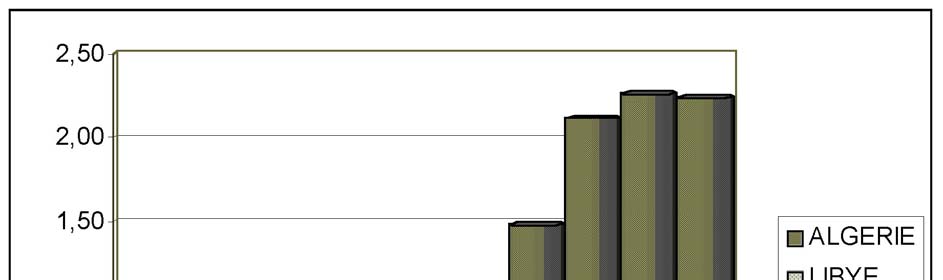
Fig.2 : Prélèvements totaux dans les aquifères sahariens en Milliards de m3/an
Le Système Aquifère Saharien est reconnu et exploité par plusieurs milliers de points d'eau , forages et
sources . L'évolution de cette exploitation indique de très fortes croissances au cours des vingt dernières années :
elle est aujourd'hui de l'ordre de 2,5 Milliards m3/an [soit 1.45Milliard en Algérie , 0.55 en Tunisie et 0.5 en Libye]. Si
cette évolution , partagée par les trois pays , devait se prolonger , il y aurait sans doute de sérieuses raisons de
s'inquiéter pour l'avenir des régions sahariennes , où l'on a pu d'ores et déjà enregistrer les premiers signes d'une
détérioration de l'état de la ressource .
L'intense évolution de l'exploitation des aquifères du SASS , et les observations dont ils ont fait l'objet au
cours des trente dernières années , ont profondément modifié la vision que l'on peut désormais se faire de cette
exploitation , laquelle se trouve confrontée à un certain nombre de risques majeurs du simple fait de son
développement : fortes interférences entre pays , salinisation des eaux , disparition de l'artésianisme , tarissement
des exutoires , hauteurs de pompage excessives ... Les trois pays concernés par le devenir du système sont amenés
à rechercher ensemble une forme durable de gestion concertée et d'exploitation équitable du Bassin Saharien .
36
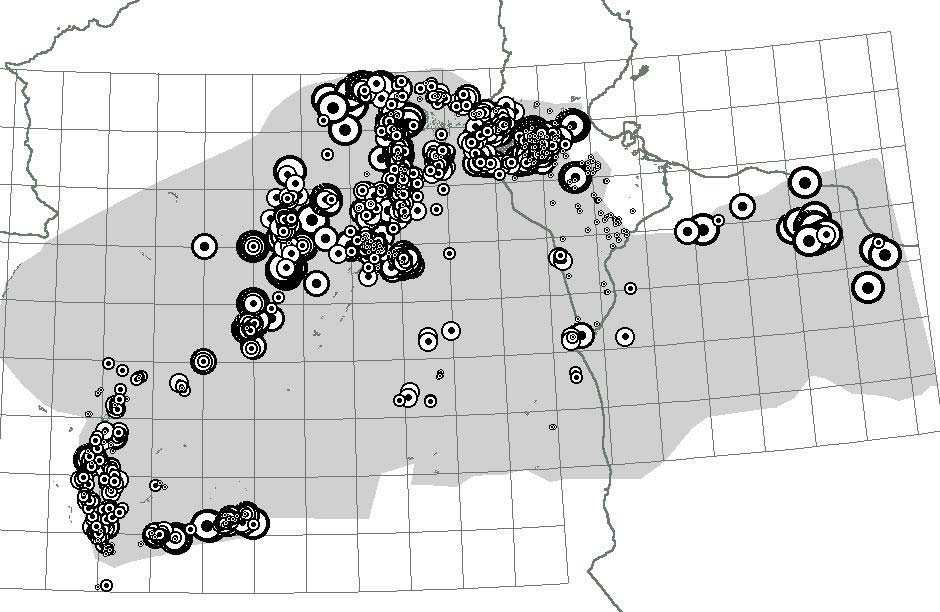
Fig.3 : Prélèvements par forages dans le SASS en 2000
Première Partie : les principales étapes de la genèse du
mécanisme
1-1- Le Cadre institutionnel et juridique international de la gestion du SASS
Il n'existe pas d'accords internationaux spécifiques concernant l'utilisation et la gestion des ressources en eau du
SASS. Cependant, les trois pays ont signé des accords multilatéraux et bilatéraux sur la base desquels ils s'engagent
37
à coopérer dans la gestion des ressources naturelles partagées.11 En outre, ils sont membres de l'Union du Maghreb
Arabe (UMA),12 dont l'un des objectifs est de favoriser l'adoption, par les pays membres, de politiques communes
dans les différents domaines, en vue du développement économique, social, agricole et commercial desdits pays. Les
décisions de l' UMA sont prises à l'unanimité des membres du conseil présidentiel, constitué par les chefs d'état des
pays membres.
L'Algérie, la Libye et la Tunisie ont participé à de nombreuses conférences internationales aboutissant à des
déclarations importantes en matière de coopération dans la gestion des eaux partagées.13 Ces déclarations n'ont pas
la valeur juridique des traités, mais cristallisent les opinions et la pratique des états, desquelles se développe la
coutume internationale.14
Enfin, au sein de l'Assemblée Générale de l'ONU en 1997, les trois pays concernés par le SASS ont voté en faveur
de la Convention sur le droit relatif aux utilisations des cours d'eau internationaux à de fins autres que la navigation.
Celle-ci a été signée par la Tunisie en 2000, mais pas par les autres pays. Cependant, la Libye est dans le processus
de signature.15 Bien que la Convention ne soit pas encore en vigueur,16 en se prononçant en faveur de l'adoption de
son texte au sein de l'Assemblée Générale, les trois pays ont montré leur adhésion aux principes fondamentaux du
droit international des eaux soutenus par la communauté internationale, à savoir que chaque Etat :
- a droit à une part raisonnable et équitable à l'utilisation des ressources en eau d'un fleuve, lac ou nappe souterraine
formant la frontière entre plusieurs États, ou traversant ladite frontière.
Par ailleurs, L'importance accordée par l'Algérie, la Libye et la Tunisie à la concertation en matière de ressources en
eau partagées a donné lieu à trois mécanismes institutionnels bilatéraux :
- la commission technique mixte algéro-tunisienne de l'hydraulique et de l'environnement, établie au sein d'une
'grande commission', qui traite les questions relatives à l'évaluation des ressources en eau partagées, à la lutte contre
la pollution, à l'échange d'informations sur les programmes d'aménagement hydraulique, au suivi des études
concernant le SASS, et à la consolidation de la coopération bilatérale en matière de gestion des eaux
- les groupes de travail au sein de la 'grande commission' algéro-libyenne, pour ce qui concerne les eaux partagée
par l'Algérie et la Libye; Les deux pays ont décidé de créer un 'comité technique mixte dans le domaine des
ressources en eau'.
- la commission sectorielle tuniso-libyenne de l'agriculture, créée dans le cadre de la 'grande commission mixte
tuniso-libyenne', vouée à l'échange d'expériences, la protection des nappes, les techniques de CES, l'identification
d'études sur les eaux souterraines partagées, le suivi des études du SASS.
Participent aux travaux des commissions et groupes de travail ci-dessus les hauts fonctionnaires des ministères
chargés de l'hydraulique. Les décisions sont consignées dans des procès verbaux. Bien que les mécanismes
institutionnels mentionnés ci-dessus se soient avérés efficaces, dans la mesure où ils ont favorisé la discussion de
thèmes importants dans le domaine de la gestion des eaux partagées, ils sont, et restent, bipartites, et ne sont pas
suffisamment autonomes, dès lors qu'ils s'intègrent dans des mécanismes institutionnels ayant des objectifs plus
larges.
11 Entre autres, la Convention africaine sur la conservation de la nature et des ressources naturelles, Alger, 15
septembre 1968 (ratifiée par l'Algérie le 11 décembre 1982), qui vient d'être révisée, le Protocole relatif à la
protection de la Mer Méditerranée contre la pollution d'origine tellurique, Athènes, 17 mai 1980, et un protocole
entre l'Algérie et la Tunisie, signé en 1978, concernant la protection des eaux des bassins frontaliers, y compris le
SASS, contre la pollution.
12 Etablie entre l'Algérie, la Libye, la Mauritanie, le Maroc et la Tunisie sur la base du Traité portant création de
l'Union du Maghreb Arabe, fait à Marrakech le 17 février 1989.
13 Entre autres, la Conférence des Nations Unies sur l'environnement, Stockholm, 16 juin 1972; la Conférence des
ministres chargés de l'eaux des pays du bassin méditerranéen, Alger, 30 mai 1990; la Conférence internationale sur
l'eau et l'environnement, Dublin, 26-31 janvier 1992; la Conférence des Nations Unies sur l'environnement et le
développement, Rio de Janeiro, 3-4 juin 1992; la Conférence en matière d'eau potable et environnement, Noorwijk,
22-23 mars 1994.
14 Voir D. Caponera, Les Principes du Droit et de l'Administration des Eaux, Editions Johanet, Paris, 2000.
15 Karima Mustafa Al-Ghaygh, Local and International Water Legislation in Libya, juillet 2002.
16 A défaut des 35 ratifications requises par son article 36.
38
1-2- Les contours possibles d'une concertation
Les simulations réalisées sur le Modèle du SASS ont mis en évidence les zones où les ressources partagées
paraissent les plus vulnérables : a) le Bassin de Ghadamès dans le Continental Intercalaire ; b) le Bassin
d'Artésianisme et de l'Exutoire Tunisien dans cette même nappe ; c) le Bassin des Chotts pour le Complexe
Terminal. Le secteur le plus exposé et le plus fragile est celui des chotts algéro-tunisiens. C'est sans aucun doute la
région où la nappe est la plus vulnérable. C'est là où se trouvent les plus fortes densités de population, et c'est là où
la pression sur la ressource sera la plus forte.
Entre l'Algérie, la Tunisie et la Libye, le système aquifère se trouve dans un état d'exploitation tel qu'il
faudra bien un jour ou l'autre penser à y contrôler ensemble les débits de pompages. Comment contrôler ces débits
dans le cadre d'une volonté des Etats de contribuer mutuellement à garantir l'avenir de la région, notamment par une
politique concertée de préservation des ressources en eau ?
Parmi les raisons objectives qui poussent à la concertation, la gestion des crises et notamment le risque de
dégradation de la ressource par suite d'une surexploitation constitue une raison majeure. Les problèmes techniques
rencontrés par les différents pays du SASS les conduisent naturellement à s'organiser ensemble : la pratique du
partenariat au cours du projet SASS a progressivement forgé la confiance mutuelle entre équipes techniques, la
conscience que les problèmes rencontrés par certains dépendent en partie des actions menées par d'autres, la
conviction que l'action commune augmente l'efficacité des solutions, et la certitude que l'échange d'informations,
qui fonde toute solidarité, est devenu avec la fin du projet SASS une activité non seulement possible mais
nécessaire. Le procédé qui garantit le contrôle en présentant le minimum de contraintes, c'est bien l'échange
d'informations. A ce titre l'OSS, à travers le projet SASS, a d'ores et déjà permis des avancées considérables : la
Base de Données élaborée renfermant l'ensemble des informations actuelles et passées sur tous les points d'eau,
leurs niveaux, leurs débits, est opérationnelle et accessible aux trois pays. A cet égard, la bonne volonté des trois
autorités de l'eau pour la communication des informations a été exemplaire. Par ailleurs, le Modèle du SASS est
d'ores et déjà disponible et opérationnel dans chacun des trois pays. Une forme de concertation efficace peut
d'abord : Base de Données et Modèle de Simulation. La mission consistant à assurer l'entretien, le développement
et l'actualisation permanente des outils développés par le projet SASS doit être confiée à un organe permanent
présentant les qualités indispensables à la pérennisation de l'opération.
1-3- Du projet SASS au projet de mécanisme : l'Unité de Coordination
provisoire
L'Atelier Régional de synthèse , tenu à Rome les 19-20 Décembre 2002, a approuvé la mise en place d'une
structure provisoire, dénommée « unité de coordination » , basée à l'OSS durant la seconde phase du projet SASS ,
et dont les caractéristiques générales , présentées, ci-après, préfigurent celles du Mécanisme définitif.
L'Objectif est de Coordonner, promouvoir et favoriser la gestion rationnelle et concertée des ressources en eau du
SASS.
La Structure est composée de : a) un comité de pilotage composé par les structures nationales en charge des
ressources en eau, agissant en tant que points focaux nationaux. Le comité se réunit en session ordinaire une fois
par an, et en session extraordinaire à la demande de l'un des trois pays ; la réunion dudit comité se tient
alternativement dans chacun des pays ; la présidence du comité est assurée par le pays hôte ; b) une unité de
coordination animée par un coordinateur désigné par l'OSS en concertation avec le comité de pilotage ; c) un
comité scientifique ad hoc pour l'évaluation et l'orientation scientifique, à mobiliser en tant que de besoin.
Statut juridique : L'unité de coordination est gérée et abritée par l'OSS.
Attributions : gestion des outils développés par le projet 'SASS' (base de données et modèle de gestion); mise en
place et suivi d'un réseau d'observation de référence ; traitement, analyse et validation des données sur la
connaissance de la ressource; développement de bases de données sur les activités socio-économiques dans la
région, en rapport avec les usages de l'eau; production et publication des indicateurs sur la ressource et les usages
dans les trois pays; promotion et réalisation d'études et de recherches conduites en partenariat par des compétences
des trois pays; élaboration et mise en oeuvre de programmes de formation et de perfectionnement; actualisation du
modèle du SASS, d'une façon régulière; réflexion et formulation de propositions sur l'évolution et le fonctionnement
du mécanisme de concertation, et sur sa mise en oeuvre dans la deuxième phase.
39
Financement : Chaque pays finance les frais de fonctionnement de son point focal. Le fonctionnement de l'unité de
coordination est assuré par des subventions et des dons octroyés à l'OSS par les pays concernés, les partenaires de
coopération, etc.
Deuxième Partie : Objectifs, Attributions, Constitution du
mécanisme
2-1- Le comité de pilotage de Tripoli des 1er et 2 Février 2005
La structuration du Mécanisme de Concertation a été au coeur des délibérations du comité de pilotage du
SASS à Tripoli. Voici les extraits les plus significatifs des interventions relatées dans les comptes rendus de cette
réunion, comptes rendus adoptés qui tiennent lieu de recommandations :
« les deux premières étapes du SASS ...ont abouti à des résultats concluants, le GEF est amené à suivre l'effort des
pays en vue de la mise en oeuvre de la dernière étape qui est la structuration institutionnelle du mécanisme de
concertation entre les pays se partageant le bassin... »
« ... cette structure doit être légère et ne pas être exigeante ni financièrement ni sur le plan du personnel. On a mis
en exergue certaines activités du Mécanisme de concertation :- réseaux communs de surveillance ;- les chotts ;-
base de données opérationnelle ; et insisté sur la création d'un noyau central du mécanisme (secrétariat permanent)
.Il est recommandé de :- Procéder à une évaluation des coûts de cette structure,- Envisager une augmentation de la
contribution des trois pays à l'OSS,- Définir un mandat précis pour le mécanisme qu'abritera l'OSS »
« Il a été proposé de soumettre le sujet de «la concertation » à la table ronde qui sera organisée au prochain CA de
l'OSS (4-5 avril 2005). Il a été demandé au coordinateur régional du SASS d'assurer la préparation de
l'organisation matérielle de cette table ronde à laquelle seront conviés les trois ministres des ressources en eau
dans les trois pays. Les trois directeurs généraux travailleront en étroite collaboration avec le SASS et l'OSS en vue
de préparer pour cette réunion du CA de l'OSS, une vision institutionnelle de cette structure légère, ses attributions
et les incidences budgétaires de son fonctionnement qui seront soumises aux trois ministres des ressources en eau.»
« Les différentes interventions ont abouti à la proposition suivante pour le MC : - légèreté de la structure ; - sous
mandat d'une organisation internationale : OSS; - définition de ses fonctions essentiellement techniques pour
préparer les éléments de prise de décision aux instances supérieures. A la fin de la réunion, le président de séance a
fait la synthèse sur les consensus dégagés, notamment, la création d'une structure de concertation légère logée à
l'OSS.»
2-2- Les PRINCIPALES CARACTERISTIQUES d'une
COMMISSION DE CONCERTATION PERMANENTE POUR LE SASS
Au terme d'une période d'un peu plus d'une année de fonctionnement de l'unité de coordination, il est
possible à présent de cerner avec un peu plus de précision le profil souhaitable, et pratiquement réalisable, pour la
structure à mettre en place , notamment en prenant en considération les recommandations issues du Comité de
Pilotage de Tripoli des 1er et 2 Février 2005. Les propositions qui suivent résultent de réflexions développées au sein
de l'unité de coordination du SASS. Une source d'inspiration constante et instructive a par ailleurs été offerte par la
consultation des excellentes études réalisées par les experts de l'Académie de l'Eau sur le fonctionnement des
organismes de gestion des cours d'eau partagés17. Bien que ces dernières études concernent plus particulièrement les
organismes de Bassin des Fleuves transfrontières, on peut y trouver, moyennant une certaine adaptation aux grands
aquifères, de nombreuses et frappantes similitudes avec les problèmes du SASS. Dans ce qui suit, et par analogie
avec les commissions des grands bassins fluviaux, nous avons pris le parti de désigner la future entité du nom de
« COMMISSION ».
.
17 Réflexions sur la gestion des eaux partagées ; PROPOSITIONS POUR CONTRIBUER À LA MISE EN OEUVRE DE
STRUCTURES EFFICACES CONCERNANT LA GESTION DES EAUX PARTAGÉES ; Académie de l'Eau, 1999.
40
Objectifs principaux et traits caractéristiques :
La Commission doit permettre une utile concertation entre les pays concernés. Elle a pour objectif final de
proposer aux Etats membres les modalités d'une gestion rationnelle des ressources en eau du SASS, commune et
efficace.
La Commission est créée pour une durée longue ou indéterminée ; ce qui la conduit à devoir s'adapter au fur et à
mesure des évolutions politiques, sociales, scientifiques et technologiques.
C'est une instance de proposition ; elle formule des recommandations, mais n'est pas chargée de responsabilités
opérationnelles d'exécution.
Elle conduit des études et recherches, effectue de la planification et de la
Programmation, et promeut des projets.
Elle dispose d'un secrétariat permanent de nature technique et administrative, installé et financé conjointement
par les pays membres avec, dans une première phase, une contribution significative de la coopération internationale.
Son personnel provient pour l'essentiel des pays membres, avec éventuellement des consultants extérieurs.
Elle doit pouvoir jouer un rôle de conseil, de médiation et d'arbitrage dans la prévention et le règlement des
conflits actuels ou éventuels.
La Commission est susceptible d'exercer des fonctions et des responsabilités de nature :
a) technique, notamment en termes de normalisation, surveillance et contrôle des usages ou de la qualité de l'eau.
traitement, interprétation et échange de données .
b) financière, comme la recherche, le montage, la répartition et la gestion des financements nationaux ou
internationaux (bilatéraux, régionaux et multilatéraux).
c) administrative, comme l'élaboration et la mise en oeuvre de règles et de procédures harmonisées concernant la
gestion des eaux partagées, en étroite liaison avec les diverses institutions nationales des pays membres.
Les Fonctions dévolues à la commission sont :
a) de nature consultative pour formuler des avis, des conseils, des suggestions, des recommandations.
b) une mission de concertation et de coordination technique et scientifique concernant les données, les études et
les projets.
c) des fonctions normatives de réglementation technique ,
d) des fonctions d'anticipation, de prévention et de résolution des conflits, en forme de médiation, de conseil et
d'arbitrage vis-à-vis des parties.
Le Type d'institution
Le statut juridique de l'organisme mis en place doit être formellement défini à la fois du point de vue du droit
international, comme vis-à-vis du régime juridique interne et des institutions de chacun des pays intéressés.
Il importe de bien préciser la structure de la commission, en particulier la place, la forme et le degré d'implication
des Etats membres, la possibilité de participation ouverte à d'autres organismes publics ou parapublics importants
tels que les institutions ou les bailleurs de fonds multilatéraux, régionaux ou nationaux, voire même les possibilités
d'intervention offertes au secteur privé : professionnels, ONG, associations d'usagers, etc...
Règles et procédures de fonctionnement
Il convient que celles-ci soient clairement établies dès l'origine de l'organisation : il s'agit de définir la
préparation des décisions, les modes de consultation, les procédures et les niveaux de décisions de nature technique,
financière ou politique requises.
En plus des règles internes, il faut aussi prévoir les relations de l'organisme avec ses principaux interlocuteurs
extérieurs : instances internationales, bailleurs de fonds, pays non membres, etc...
2-3- LES ETAPES de la CONSTITUTION d'une
COMMISSION DE CONCERTATION PERMANENTE du SASS
41
Sur les étapes de constitution des commissions internationales, nous nous sommes également référés aux
études réalisées sur les organismes de gestion des cours d'eau frontaliers par l'Académie de l'eau et le Réseau
international des organismes de bassin18
1. Les actions préalables dépendant des pays
1.1. Les réseaux de mesure
Ceux-ci doivent porter sur les pluies, les eaux de surface (débit, niveau, qualité) et les eaux souterraines (quantité
des prélèvements, niveaux d'eau, qualité des eaux, sources de pollution) avec une implantation et une densité
adaptée à l'échelle du bassin.
1.2. La formation et l'approche participative
Il faut prévoir la formation des gestionnaires de l'eau et des techniciens locaux à la concertation et à l'écoute des
usagers; il faut adopter une approche participative dans la formation et s'appuyer prioritairement sur les compétences
et les capacités locales, notamment sur les structures éducatives de chaque pays.
2. La concertation préalable
Il est souhaitable que les pays partageant le SASS développent encore plus des contacts particuliers pour échanger
des informations sur la ressource en eau, sur sa gestion et sur les problèmes rencontrés par chacun. Ces contacts
s'établissent d'abord à un niveau technique et se développent au travers des services respectifs chargés de l'eau,
d'abord sous forme d'invitations de une ou plusieurs journées, puis de séjours plus longs sur des thématiques
techniques. La multiplication de ces contacts, qui peuvent gagner en efficacité grâce à une médiation extérieure,
constitue un garant de l'apprentissage de toute solidarité véritable.
3. La phase de constitution de la Commission
La concertation préalable permet aux différents services nationaux de mieux se connaître et de connaître les
problèmes de l'ensemble du bassin afin de faire apparaître la nécessité d'organiser une concertation permanente.
3.1. L'organisation de la conférence préparatoire et son Agenda
Cette conférence doit réunir des représentants des Etats concernés, des Organisations internationales du secteur de
l'eau et des bailleurs de fonds.
L'Agenda de cette conférence doit comprendre :
- un exposé sur les problèmes transfrontières perturbant le cycle de l'eau du SASS,
- des propositions pour y faire face, en mettant en évidence les avantages, la nécessité et les gains résultant d'une
coopération entre les pays,
- une mise en commun des objectifs de chaque partie pour un développement équitable et durable,
- un cadre proposé pour la coopération : objectifs d'action, études à mener, échanges d'informations techniques,
répartition des tâches entre celles à mener ensemble (ou à coordonner par la commission) et celles dévolues à
chaque État.
3.2. Objectifs de la Commission
Ces objectifs peuvent être limités d'abord à des études destinées à préciser les premières réalisations souhaitables.
Ils peuvent ne porter que sur des problèmes spécifiques, par exemple la consolidation des bases de données sur la
ressource, le développement de bases de données sur les usages de l'eau, l'étude des normes, les protocoles
d'échanges de données, la préparation et la diffusion des indicateurs, la mise à jour des modèles et leur exploitation,
la mise en place et le renforcement des réseaux de surveillance, la reconnaissance approfondie des zones à risques et
des points sensibles, la réalisation de plans d'urgence pour les zones les plus critiques, la mise en oeuvre de
formations, etc...
Ces objectifs peuvent être élargis dans une phase ultérieure. Il est en effet souhaitable que les objectifs fixés soient
progressifs en commençant par les plus aisés à réaliser et en passant ensuite à des objectifs ambitieux en visant la
gestion globale des ressources en eau du bassin, et la préparation d'un schéma directeur des eaux.
3.3. Les moyens à prévoir pour réaliser les premiers objectifs
La réalisation de ces objectifs passe par des actions sur le terrain, telles que :
Définition , délimitation et mise en oeuvre des Périmètres Prioritaires d'Observation communs , ou encore
Périmètres de Sauvegarde , secteurs où la nappe est particulièrement menacée et nécessitant la mise en place d'un
plan d'urgence.
18 Guide stratégique pour la constitution de commissions internationales inter états sur les eaux
partagées ; Académie de l'eau et Réseau International des Organismes de Bassin ; 2002
42
études concertées et échanges d'informations,
Programmation et démarrage d'Actions de Recherche scientifique Concertées,
Mise en place d'un Programme d'Action Stratégique Concertée,
Programmation et réalisation d'ouvrages (piézomètres, stations hydro-météo ...),
formation des opérateurs, des usagers,
information du public.
Les moyens nécessaires dépendent pour partie des Etats mais dans une première phase de démarrage, de trois à
quatre années, le rôle de la coopération multilatérale est fondamental en termes de capacité d'entraînement,
d'intermédiation et de démonstration.
4. L'organisation de la Commission
Celle-ci doit être précisée et développée dans la Convention fondatrice dont les signataires sont les représentants des
États riverains et, éventuellement, d'une instance internationale associée, la plus compétente pour l'heure étant
l'OSS. Les organes de la commission comprennent :
un Conseil d'Administration, qui élit son Président (alternativement parmi les membres de chaque État),
un Conseil Scientifique,
des groupes de travail, qui peuvent être permanents traitant de problèmes généraux et se réunissant
périodiquement ou temporaires (« groupes ad hoc ») traitant de problèmes particuliers et occasionnels,
un Secrétariat permanent,
une Instance chargée des litiges éventuels.
La Convention fondatrice doit prévoir de façon précise le rôle et la composition de chacun de ces organes ainsi que
les dispositions et procédures pour en adopter les décisions ou les recommandations (unanimité, majorité qualifiée
...). La Convention doit également fixer la périodicité de réunion des organes non permanents (Conseil
d'Administration, Conseil Scientifiques, Groupes de travail) et les lieux des réunions, ainsi que le siège du
Secrétariat permanent. Peuvent également être prévus des organes annexes, comme les « Comités nationaux »
assistant les groupes de travail et les conseils.
La répartition en pourcentage des frais de fonctionnement entre les parties signataires doit être fixée par la
Convention, le montant des dépenses étant du ressort du Conseil d'Administration sur proposition du Secrétariat
permanent. Le C.A. fixe aussi le budget des travaux communs éventuellement et leur répartition entre les parties tant
pour les investissements que pour les frais d'exploitation et de maintenance des installations.
5. Statut juridique de la Commission
Ce statut doit lui donner la personnalité morale vis-à-vis des Etats et notamment de celui du siège de son Secrétariat
permanent.
6. Litiges, amendements, avenants, ratification.
Chaque Etat peut porter tout litige le concernant devant la Commission .
Toute partie peut proposer des amendements à la Convention qui sont examinés lors d'une réunion du Conseil
d'Administration.
La Convention proposée est soumise à ratification par les Etats concernés et par les organisations internationales ou
régionales parties à celle-ci, notamment l'OSS.
2-4- UN PROGRAMME QUADRIENNAL d'ACTIONS CONCERTEES pour la
COMMISSION du SASS
Il est primordial, pour la visibilité et pour la crédibilité de la commission, que ses activités démarrent
aussitôt effectuée sa mise en place effective. Ces activités doivent être planifiées, programmées et pré financées et
ce, pour une période de temps autorisant à la fois la pérennisation des actions principales et l'obtention de résultats
tangibles pour démontrer la validité et la solidité de la structure. Un programme quadriennal permettra d'atteindre
au mieux ces objectifs. Il s'agit d'un programme d'activités couvrant la période des quatre années allant de Janvier
2006 à Décembre 2009. Les activités proposées s'inscrivent dans des thématiques générales, à l'intérieur desquelles
une liste d'activités est donnée ci-après à titre purement indicatif et non limitatif. Il est bien entendu que la
43
spécificité de ces actions, c'est précisément leur caractère « concerté » en ce sens qu'elles associent nécessairement
des acteurs, sinon toujours des trois pays, au minimum de deux pays:
1 - Délimitation de zones de sauvegarde transfrontière et mise en
oeuvre de plans d'urgence :
Une des principales fonctions de la commission est d'identifier , de faire reconnaître puis d'assurer le suivi
(monitoring) des zones à sensibilité partagée par deux ou trois des pays membres. Le projet SASS a montré par
exemple que dans des zones à risques, comme la région des chotts algéro-tunisiens , on peut considérer que ,
dorénavant, tout grand projet de développement hydraulique national, n'intégrant pas le pays voisin est voué à
l'échec . Ceci est valable aussi bien pour le CT [Bassin des Chotts] que pour le CI [Bassin d'Artésianisme et de
l'Exutoire Tunisien] , ce qui permet d'identifier d'ores et déjà deux secteurs d'intérêt commun , à l'intérieur
desquels il faudra identifier les zones prioritaires et les observations et les actions de remédiation à entreprendre, y
compris la limitation éventuelle des prélèvements. Par ailleurs, les simulations réalisées sur le Modèle SASS ont
montré le grand intérèt que les trois pays portent à l'exploitation du CI dans la région de Ghadamès que l'on peut
considérer également comme secteur d'intérèt commun : à la commission reviendra la charge d'identifier les vrais
problèmes et de faire exécuter les actions les plus adéquates pour les résoudre.
Zones de sauvegarde et mesures d'urgence
Dans les pays du SASS, l'utilisation des eaux par les particuliers est soumise au régime de la concession et
les travaux de captage profond soumis à autorisation. Lorsque l'état de la ressource l'exige, Il est prévu la
possibilité d'une limitation des volumes autorisés, sans indemnisation des préjudices. Cette limitation de
l'exploitation peut aller jusqu'à retirer le permis de concession dans des zones dites « périmètres d'interdiction »,
créés par décret. Lorsqu'il s'agit de sauvegarder la ressource, toutes les recherches et les captages sont alors
soumis à autorisation dans des zones dites « périmètres de sauvegarde ».
Mais, en l'absence de compensations financières destinées à réparer le préjudice dû aux restrictions des
droits d'usage, toute mesure visant la limitation des prélèvements rencontre une très grande résistance de la part
des exploitants. Ceux-ci contournent alors la réglementation et se passent de l'autorisation de l'administration par
la réalisation de « forages illicites ». Ce type d'ouvrages se compte déjà par milliers dans les zones les plus
sensibles du SASS, notamment la région des Chotts. Dans d'autres pays, les ressources financières provenant de
redevances sur les prélèvements des eaux souterraines servent à l'indemnisation des exploitants agricoles soumis à
des restrictions en zone de protection. Ces indemnités permettent une réduction partielle des activités d'irrigation et
un redéploiement vers d'autres activités moins consommatrices d'eau19.
2 - Etudes concertées et échanges d'informations :
Etudes à caractère technique (hydraulique, environnemental, agronomique, énergétique), socio-économique,
financier, règlementaire,
Par exemple, et sans hiérarchie : étude sur les doses d'irrigation, comptage précis des prélèvements sur un
échantillon de forages, méthodes d'inventaire des points d'eau, techniques de mesures de la charge dans un forage
artésien, utilisation de GPS de précision, mesure de paramètre de qualité de l'eau in situ, étude commune sur les
règlementations de l'eau, études sur les tarifications et sur les coûts de l'eau, étude sur l'application des techniques
d'économies d'eau.
3 - Actions de Recherche scientifique Concertées :
Il faut anticiper les problèmes en encourageant le développement d'études et de recherches scientifiques en
collaboration, le vecteur le plus naturel pour ce faire étant l'Université et les centres de recherche. Ces Actions de
recherche concertées portent sur des thèmes d'intérêt commun et au caractère spécifiquement transfrontière, tels la
problématique de l'hydrogéologie et de l'hydrogéochimie des Chotts, ou des thèmes généraux du contexte saharien
pour lesquels la commission voit un intérèt particulier , tels les besoins en eau des plantes, l'étude des variétés
résistantes au stress hydrique , ou à la salinité, ou encore le comportement du complexe eau-sols-sels dans
l'environnement saharien : impact de l'irrigation localisée avec des eaux chargées, le dessalement solaire, la
19 Bargaoui.Z : Mise en oeuvre et application du cadre règlementaire ; in Besbes.M & al : L'Avenir de l'eau, un
nouveau challenge pour la Tunisie, Institut Tunisien d'Etudes Stratégiques, Tunis, 2002.
44
récupération de l'énergie géothermique, les technologies de refroidissement, l'entartrage des conduites par les eaux
chaudes chargées, les retours d'irrigation vers la nappe, le drainage agricole, la recharge des nappes sahariennes,
l'évaporation profonde , l'élasticité de la demande agricole en eau vis-à-vis de la tarification, la prévention et
l'atténuation des sécheresses.... Autant de sujets, conduits en commun par des équipes mixtes sur des périodes de
moyenne ou longue durée, qui ne peuvent que renforcer l'esprit de solidarité.
4 - Programmation et réalisation d'ouvrages : suivi de la réalisation des piézomètres du réseau de surveillance
piézométrique, réseau qualité.
5 - formation :des opérateurs, des usagers, des acteurs de l'eau d'une manière générale.
6 - information du public , dont notamment préparation et édition d'un CD-ROM éducatif sur l'eau au Sahara ,
destiné aux enfants des écoles primaires et secondaires de la région, vecteur incomparable de messages de
coopération et de solidarité transfrontière . Par ailleurs, le site web de la commission devrait ètre publié dès la mise
en place de la commission.
2-5- STATUT de la Commission
Statut : La Commission jouit de la personnalité morale et juridique, et de l'autonomie financière pour
mettre en exécution les buts et objectifs assignés dans ses statuts. Elle a la capacité de conclure des contrats, lui
permettant de mettre en oeuvre ses programmes d'action dans le cadre de la mission qui lui est assignée,
La Commission, son personnel et les personnes participant aux réunions de ses organes, à titre officiel,
jouissent sur le territoire des Etats membres des immunités, privilèges et facilités requis pour le bon
accomplissement de leurs tâches.
La Commission est logée au siège de l'Observatoire du Sahara et du Sahel ; à ce titre ........
Durée : La Commission est établie pour une durée indéterminée.
Objectifs : La Commission a pour objectifs de garantir le développement durable et équitable, et la gestion
rationnelle des ressources en eau du SASS en vue d'assurer le bien être des populations des Etats membres. En
conséquence, la Commission agit dans le but d'atteindre un niveau d'utilisation optimale de cette ressource et pour
protéger les conditions de gisement de l'aquifère contre toute source de dégradation. Le but de la Commission est
également de mettre en place et de développer des données et des informations fiables concernant l'aquifère du
SASS et les eaux qu'il renferme pour aider les Etats membres à exploiter et protéger cette ressource en connaissance
de cause.
Prérogatives : La Commission est essentiellement un organe consultatif d'aide à la décision. Ses
compétences sont de nature technique et n'interfèrent en rien avec les domaines de souveraineté des Etats membres.
La Commission du SASS constitue une force de proposition et de médiation.
Missions : les missions de la Commission consistent en la mise en application des directives des Etats
membres, notamment par : - la publication d'un Rapport Annuel sur l'Etat du SASS ; - la coordination ... ; -
l'échange d'expériences .... - La collecte et l'échange d'informations techniques, économiques et scientifiques ... ;
La préparation de recommandations, de normes, de directives, d'études et recherches, - Etc ...
2-6- Les Organes de la Commission
Le Conseil d'Administration :
Le CA comprend :
les représentants des Etats membres à raison de deux représentants titulaires et d'un représentant suppléant par pays,
responsables techniques des Administrations de l'eau et de l'environnement,
un représentant de l'institution hôte de la commission : le secrétaire exécutif de l'OSS ou son représentant,
le secrétaire permanent de la commission, avec voix consultative.
Les langues de travail du Comité sont : l'Arabe, le Français et l'Anglais.
45
Le CA tient une Session ordinaire par an, qui comporte en son ordre du jour l'adoption du budget de l'exercice
suivant .
Le Comité peut se réunir en Session extraordinaire à la demande des 2/3 de ses Etats membres.
Toutes les décisions du Comité sont prises à l'unanimité des membres.
La présidence du Comité est assurée alternativement par les représentants des trois Etats membres, pour une durée
de deux ans. Le président est assisté par le Secrétaire Permanent de la commission.
CONSEIL
D'ADMINISTRATION
COMMISSION SASS :
Groupe de
Echange d'informations et
Travail A
de données ; Evaluation de
la situation du SASS;
OSS
CONSEIL
Formulation de plans et
SCIENTIFIQUE
stratégies; Proposition de
SECRETARIAT
Groupe de
mesures de protection &
PERMANENT
Travail B
conservation ; Publication du
Rapport Annuel
Groupe de
Travail C
Algérie
Tunisie
Libye
Fig.4.: Organigramme de la Commission du SASS
Le Secrétariat Permanent :
La coordination administrative et technique des activités de la commission est assurée par un Secrétariat
Permanent.
Le Secrétariat Permanent est domicilié à l'OSS. C'est une structure légère qui ne comporte que trois permanents
(un de chaque pays) : le secrétaire permanent et deux ingénieurs .
Le CA fixe la rémunération du Secrétaire Permanent et du personnel, qui sont nommés par les Etats membres.
Le Secrétaire Permanent est rémunéré à plein temps pendant toute la durée de son mandat.
La durée du mandat du Secrétaire Permanent, est fixée à 4 ans, renouvelable.
Les missions du Secrétaire Permanent concernent de manière non exhaustive :
- La préparation du Rapport Annuel sur l'Etat du SASS.
-
La mise en application du plan d'action de la commission, la préparation et le suivi avec l'OSS et les
institutions internationales, des dossiers de nature à soutenir et à permettre des financements extérieurs pour
chacun des pays membres.
-
L'organisation administrative et le fonctionnement du Secrétariat Permanent,
-
La présentation du rapport annuel des activités du Secrétariat et d'un rapport par session du CA;
-
L'élaboration du projet de budget annuel, sa présentation aux délibérations, sa soumission à l'approbation du
CA et de son exécution ;
-
La convocation aux sessions ordinaires ou extraordinaires du CA ;
46
-
L'établissement des procès-verbaux des réunions du CA et leur diffusion ;
-
La coordination administrative entre les délégués des Etats membres ;
-
La participation, avec voix consultative, à toutes les réunions du CA ;
-
L'information des pays et des institutions intéressées par les travaux du CA.
Le Conseil Scientifique
Les groupes de travail
Les groupes de travail constituent le centre de réflexion, le bureau d'études et la force de proposition du secrétariat
permanent. En effet, cette dernière structure est très légère et ne comporte que trois permanents (un de chaque
pays) : le secrétaire permanent et deux ingénieurs suffisent . Un très grand nombre de tàches doit donc ètre confié à
des groupes de travail d'experts multipartites .
L'Instance chargée des litiges éventuels
2-7- Le Budget de la première quadriennie
2-8- Le projet de CONVENTION fondatrice
47
Annex 7
Draft Ministerial Declaration
48